Category Archives: Rants&Rambles

Immigration

I live in a mongrel nation. The more a person born in the UK claims “pure” blood, the more certain their heritage seems to be a total mish-mash of this and that. We are a country that has seen wave after wave of immigration, each and everyone of them adding something to what it means to be British.

Yet as brexit shows, we are a country that doesn’t much like immigrants.

I live in a country that dislikes, despises and begrudges immigrants their place in this country, whilst living in a part of that country with a high proportion of immigrants that seems to cope just fine. In fact the greatest irony of all seems to be that areas with high immigration value their immigrants best where as areas of low immigration are fearful of all and any changes that newcomers might bring.

Perhaps it isn’t surprising: I was brought up in a village with barely three surnames to rub together. Everyone was related in a byzantine set of connections, cousins to the right and left of me, with long memories for grudges. At his funeral, my father who had lived in the village since the age of five was still described decades later as that Scots boy who came down and married our girl.

But there is something more at play than simple parochial fear of the  stranger. Facts show that immigration is economically good for the country accepting immigrants, good for the host society in many and varied ways, so why don’t we believe those facts?

The act of moving from a poor country to a rich one makes workers dramatically more productive. A world with more migration would be substantially richer. The snag is that the biggest benefits of moving accrue to the migrants themselves, while the power to admit them rests with voters in rich countries. Democratic accountability is vested largely in national governments. Yet most Western countries, struggling with ageing populations and shrinking workforces, need more migrants. So they have to find ways to make migration policy work for everyone.

The first step is to recognise the causes of the dislike of newcomers.

Several stand out: the belief that governments have lost control of their borders; the fear that migrants drain already-strained welfare systems; the perception that migrants are undercutting local workers; and the fear of being swamped by alien cultures.

Assuaging these concerns and fears requires both toughness and imagination. Start by regaining control. Overhaul the outdated international systems for aiding refugees; at the same time, open routes for well-regulated economic migration to the West. This will require countries to secure borders and enforce laws: by preventing the hiring of illegal immigrants and deporting those denied asylum, for example.

Where they do not exist, the introduction of ID cards can help. Maybe it’s time of the UK to bite the bullet on this topic.

Second, encourage all migrants, including refugees, to work, while limiting the welfare benefits that they can receive. In America, where the safety net is skimpy, labour rules are flexible and entry-level jobs plentiful, even migrants who dropped out of high school are net contributors to the public finances. Sweden, by contrast has a policy that seems designed to stir resentment, showering refugees with benefits while making it hard for them to work. Turkey does a better job at integrating refugees, even if it does not recognise them as such.

A sensible approach would be to allow migrants to get public education and health care immediately, but limit their access to welfare benefits for several years. This may seem discriminatory, but migrants will still be better off than if they had stayed at home. An extreme illustration can be seen in the oil-rich Gulf, where migrants are ruthlessly excluded from the opulent welfare that citizens enjoy. The Gulf is not a model. Migrant workers receive too little protection against coercion and abuse. But because they so obviously pay their way, the native-born are happy to admit them in vast numbers. Elements of that logic are worth considering in the West.

Third, ensure that the gains from migration are more explicitly shared between migrants and the native-born in the host country. One way is to tie public spending, particularly on visible services such as schools or hospitals, more directly to the number of migrants in a region. Another, more radical idea might be to tax migrants themselves, either by charging for entry or, more plausibly, by applying a surtax on their income for a period after arrival. The proceeds could be spent on public infrastructure, or simply divided among citizens.

The more immigrants, the bigger the dividend.

Value

Sex is a funny business. It has become a hyper-efficient and deregulated marketplace, and, like any hyper-efficient and deregulated marketplace, it often makes people feel very bad.

Our newest sex technologies, such as Tinder and Grindr, are built to carefully match people by looks above all else. Sexual value continues to accrue to abled over disabled, cis over trans, thin over fat, tall over short, white over nonwhite, rich over poor.

There is an absurd mismatch in the way that straight men and women are taught to respond to these circumstances. Women are socialized from childhood to blame themselves if they feel undesirable, to believe that they will be unacceptable unless they spend time and money and mental effort being pretty and amenable and appealing to men. Conventional femininity teaches women to be good partners to men as a basic moral requirement: a woman should provide her man a support system, and be an ideal accessory for him, and it is her job to convince him, and the world, that she is good.

Men, like women, blame women if they feel undesirable.

They do no blame themselves for the things they say or do, or fail to say or fail to do. They do not blame the very narrow definitions available to them of male success in our society today.

And, as women gain the economic and cultural power that allows them to be choosy about their partners, men have generated ideas about self-improvement that are sometimes inextricable from violent rage.

A subset of straight men calling themselves “incels” have constructed a violent political ideology around the injustice of young, beautiful women refusing to have sex with them. These men often subscribe to notions of white supremacy. They are, by their own judgment, mostly unattractive and socially inept. (They frequently call themselves “subhuman.”) They’re also diabolically misogynistic.

“Society has become a place for worship of females and it’s so fucking wrong, they’re not Gods they are just a fucking cum-dumpster,” a typical rant on an incel message board reads. The idea that this misogyny is the real root of their failures with women does not appear to have occurred to them.

The incel ideology has already inspired the murders of at least sixteen people. Elliot Rodger, in 2014, in Isla Vista, California, killed six and injured fourteen in an attempt to instigate a “War on Women” for “depriving me of sex.” (He then killed himself.) Alek Minassian killed ten people and injured sixteen, in Toronto, last month; prior to doing so, he wrote, on Facebook, “The Incel Rebellion has already begun!” You might also include Christopher Harper-Mercer, who killed nine people, in 2015, and left behind a manifesto that praised Rodger and lamented his own virginity.

Incel stands for “involuntarily celibate,” but there are many people who would like to have sex and do not. (The term was coined by a queer Canadian woman, in the nineties.) Incels aren’t really looking for sex; they’re looking for absolute male supremacy. Sex, defined to them as dominion over female bodies, is just their preferred sort of proof.

What incels want is extremely limited and specific: they want unattractive, uncouth, and unpleasant misogynists to be able to have sex on demand with young, beautiful women. They believe that this is a natural right.

It is men, not women, who have shaped the contours of the incel predicament. It is male power, not female power, that has chained all of human society to the idea that women are decorative sexual objects, and that male worth is measured by how good-looking a woman they acquire. Women—and, specifically, feminists—are the architects of the body-positivity movement, the ones who have pushed for an expansive redefinition of what we consider attractive. “Feminism, far from being Rodger’s enemy,” Srinivasan wrote, “may well be the primary force resisting the very system that made him feel—as a short, clumsy, effeminate, interracial boy—inadequate.” Women, and L.G.B.T.Q. people, are the activists trying to make sex work legal and safe, to establish alternative arrangements of power and exchange in the sexual market.

Picnic

After a tennis match, the Home team provides a meal for the 12 people who have played. Since our club is tiny and comes without a kitchen, we all take some food along and essentially have a picnic afterwards.

So looking forward to the next match, I’m thinking that we’ll have something along the following:

  • Puff Pastry Tart – essentially an assemble job with tomato sauce, pesto and antipasti leftover from the weekend
  • Potato and leek frittata – basically the stuff you find at the bottom of your fridge and cupboards
  • Green salad (probably Nigel Slaters, fennel salad with parmesan dressing)
  • Tabbouleh, though maybe using quinoa rather than cracked wheat because I’ve got some cooked lying around in the fridge.

And someone will bring along either bread and butter, a fruit salad or pre-prepared desert like tiramisu, whilst another will bring wine and beer to the party.

& even though it’s all very simple and easy to make it will taste brilliant after three hours playing tennis.

Today

Wake up and reach for the coffee.

Deal with the dead (almost mummified) mouse corpse behind the fireplace. So much for the cat sitter not finding any rodents.

Discover the very lively mouse cowering at the back of the grate, and with the help of two out of three cats, corner it and trap it in a glass. It looks like we’re back to the days of our mouse “catch and release” programme.

Have a couple of conversations with the neighbours whilst re-locating the mouse including the guys with the bruiser who terrorises my babies. Managed to keep it civil. His fat cat has been put on a diet, which might explain some of it’s grumpy menace.

Elsewhere agreed to visit my very elderly next-door neighbour to ostensibly to chat about her garden, but basically to schedule some time to chat see how she’s getting on. Wondering vaguely whether there will be people around to take an interest in us when we’re in our 90s or whether it will even be considered normal or acceptable to show an interest in your elderly neighbours. Obviously I am also hugely interested in her lovely garden as well, not least because it’s always great to crib ideas.

Lunch.

Had a tennis lesson and got things together for tonight’s mini-tournament of mixed doubles.

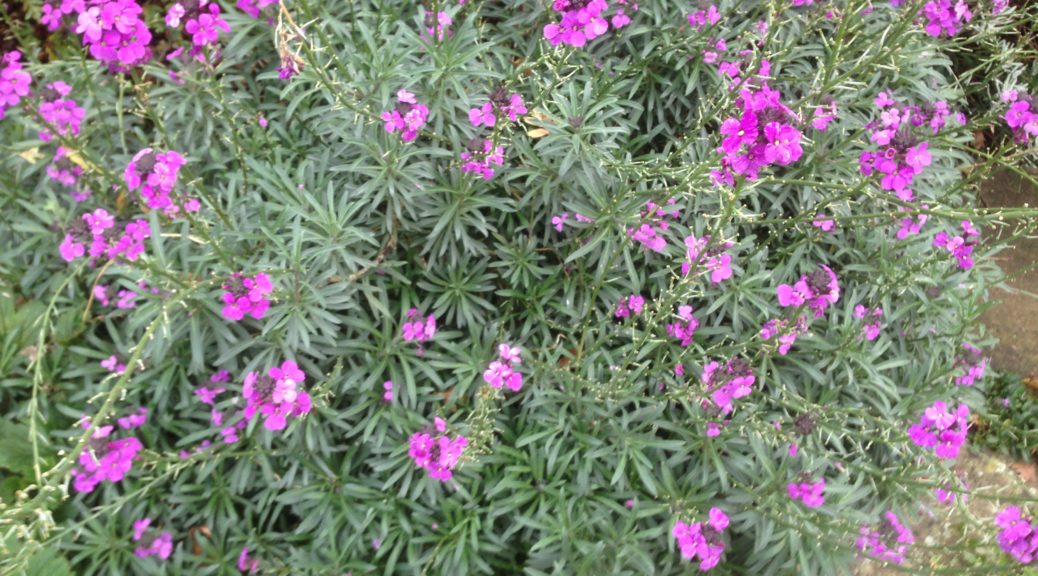
Looked through the garden now that the weather has broken to a more manageable 25C to determine what has survived and what has not. There are lots of gaps up on the gravel roof after 6 weeks of no rain and 30C and some surprising survivals. One of the perennial wallflowers has died but there’s another in a pot to replace it. All of the roses and iris have survived (some judicious watering while we were away).

Engaged in a few political conversations on-line to absolutely no obvious effect, but at least I’ve tried. I find the current political climate entirely without rhyme or reason.

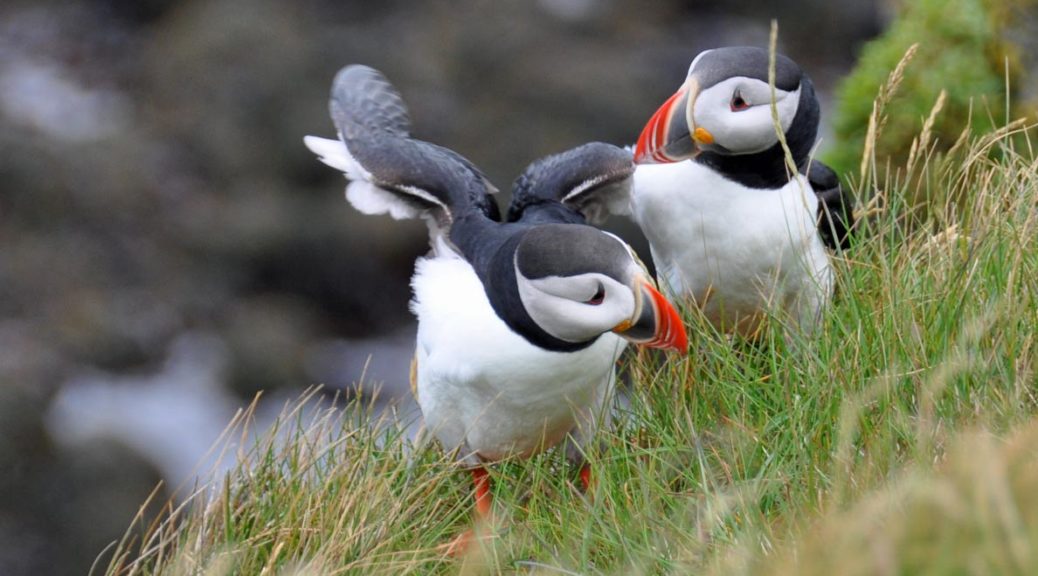
Sorted through some more of the photos from Iceland – still difficult to believe that it was so grey and gloomy – and finding it odd that it’s such a difficult country to photograph well. Maybe the landscapes are just too big to capture easily.  Certainly the details are much more easily captured with endless decent pictures of cute puffins.

& now I’m off to taxi the kids around. Surely by now they should be driving themselves, even in London?

Stockpile versus Hoarding

So my country has gone from madness to political madness and now people are seriously talking about the need to stockpile food in the event we bomb out of the EU onto WTO only rules. The UK produces just 60% of its own food. It is curiously unprepared for obligatory self-sufficiency, or even the kind of delays that a sudden change in customs might require for a just-in-time supply chain for supermarkets.

Living in relatively wealthy London will either be a decisive advantage or disadvantage. We have a lot of people living in close proximity to each other, which means more people fighting over the final few tomatoes in the shop, but it also means that the first place people will bring their goods to sell will be well-to-do London, where people can afford the higher prices and the stuff can be sold quickly and easily.

What sort of stockpile of food might we put together?

Sweden’s government delivered leaflets to 4.8m Swedish households, inviting them to consider how they could best cope in a situation of “major strain … in which society’s normal services are not working as they usually do”. The government had in mind all kinds of crises – natural disasters, terrorism, cyber attacks, all-out war – but the basic survival strategy for all of them was the food hoard.

The leaflet recommended that every home lay down a stock of non-perishables:

  • specifically breadstuffs with a long shelf-life (the leaflet mentioned tortillas and crackers),
  • dried lentils and beans,
  • tinned hummus and sardines,
  • ravioli,
  • rice,
  • instant mashed potato,
  • energy bars

Switzerland has long had a similar sense of foreboding: legislation passed in the cold war still demands that every citizen has access to a nuclear shelter. But the list of recommended foods to be kept in the larder (or bunker) in case the worst happens is, as one would expect of Switzerland, more thorough. “Tick the items you need on the following list … and ensure that you always have them in stock” is the advice of the Swiss civil defence authorities. The list begins with

  • nine litres of water per person (for an emergency lasting three or four days)
  • pepper and salt,
  • dry sausage,
  • dried fruit and pulses,
  • tinned meat and fish,
  • hard cheese,
  • pet food and
  • condensed milk, chocolate, sugar, jam, honey and crispbread.

And I don’t seriously believe that the water supply would be threatened so I’ll not be building up a stock of water bottles, but I am considering some of the rest. I’m also considering stockpiling some alcohol to get us through the first few months of readjustment to this brave new world. My list looks something like this:

  • wine, beer, cider
  • breadstuffs with a long life, crackers, crispbread and pastry snacks
  • lentils and beans, whether dried, tinned or packaged ready-to-eat
  • dried pasta
  • olive oil
  • rice, especially carnaroli/arborio
  • spices, ketchup, long life bottled/canned chilli sauce, garlic puree, ginger puree, tomato puree,
  • dark chocolate
  • dried pet food

And all of this fades into total insignificance compared to the risks to the medical supply chain into the UK.

No insulin is made in the UK: it can’t be by March.  So a no deal Brexit threatens our insulin supply according to medicines regulator Sir Michael Rawlings.

What are the government going to do to prevent type-1 diabetics dying ?

English

My daughters are English. I am not. We all live in England, but in London so does that really count? What does it mean to feel yourself to be first and foremost English and only British as an afterthought?

A lot has been written since 2016 about whether the Brexit vote marked an eruption of English nationalism.  Explicit English nationalism remains nonexistent or dormant, not active, unlike other nationalisms in these islands. That the Brexit vote was, in part, an immense expression of English identity is, on the other hand, beyond dispute.

Recently the BBC has been reporting on English identity. Most of it is based on a large survey by YouGov that explores the language, contours and contexts of that identity. Its findings should be a real wake-up call for anybody who is serious about modern British politics, especially on the left.

The fundamental finding in the BBC’s English Question surveys is that 80% of people in England strongly self-identify as English.

On one level this is hardly surprising. England is where they live. It’s where most of them were born. But let the idea and its implications sink in. And note also that there are almost no exceptions at all. This isn’t just coastal towns or leafy lanes. In every region, every class, every age group and almost every other demographic subset, a majority strongly  self-identifies as English. The only subset exceptions, though they are important ones, are black and minority-ethnic adults (but only by a whisker), people who self-identify as British not English, and people of other nationalities altogether.

Almost as important a finding, however, is that a strong sense of English identity actively coexists with other identities. Again, this is hardly surprising. Which of us self-identifies as one thing alone?

The most common of these other identities, not surprisingly, is a British one, with 82% strong identification. On this, with the sole exception of other nationalities, every subset in the survey (this time including black and minority-ethnic adults) strongly identifies with Britishness . Additionally, half of the survey strongly feel an English regional identity – up to 74% in the north-east. Around a quarter strongly feel European too.

There is much else in the BBC/YouGov survey, most notably it shows that whilst the Scottish and Welsh are optimistic about where they and their region are heading, the English are pessimistic and look to recreate their past.

The greatest contributors to English identity, the survey suggests, are the natural landscape and the nation’s history. The strongest image of England is a pre-industrial bucolic nation populated by well-mannered and virtuous citizens. People generally see England as conservative and traditional rather than liberal and outward-looking.

There is more than a hint of nostalgia about people’s sense of Englishness. Almost three times as many of its residents think England was ‘better in the past’ than believe its best years lie in the future.

In Scotland, Wales and Northern Ireland, by contrast, significantly more people think their country’s best years lie ahead rather than behind them.

So while the rest of the UK feels pretty optimistic about their prospects, England seems particularly glum. The more English people feel, the more retrospective they are, and English wistfulness is particularly strong among those who voted to leave in the Brexit referendum.

England’s Christian tradition is important for almost half of Leave voters, but only 29% of remain voters. Leave voters are significantly more likely to talk of Englishness in terms of history, fair play, tolerance, plain-speaking and friendliness than those who wanted to remain

Many on the left prefer the silence. Some find England embarrassing – a “not in my name” country. Many prefer to navigate the multiple identities of Britishness while leaving the self-identifying English alone. As a result the left of centre is not much represented in the English conversation.  Nationalism and Englishness is often conflated by those on the political left where as those on the right of politics seem determined to present a pastiche.

Labour embodies this unease. Few Labour policy documents mention England at all, even when they concern policy areas such as the health service or education, which are devolved and on which, therefore, “national” policy actually means English policy.

Faced with English identity, Jeremy Corbyn is little different from Tony Blair or Gordon Brown. This week Brown made a fine speech about bringing the country together with a programme of reforms. Yet the word England appeared just once in his speech, and only in the context of English regionalism, not English identity. It is hard to think of any senior Labour politician since Tony Benn or Michael Foot who talked about England with any degree of comfort. Their view of England may have been unduly romantic and radical, but at least it existed.

This isn’t intended as a bash-Labour point. For the most part, Labour is no better and no worse than anybody else on the liberal left in this regard. There are honourable exceptions, notably the former minister John Denham, no longer in parliament but actively pushing his English Labour Network. A recent Institute for Public Policy Research speech by the maverick shadow cabinet member Jon Trickett was another important recognition of the need for a political conversation to develop on the left that includes, not ignores, England.

England is not going to go away. And the current English mood is a challenge to every aspect of the progressive tradition. As the BBC/YouGov survey shows, England is not just a place with a real sense of identity. It is also a pessimistic place. Most people in the survey think England was better in the past. The pessimism is widely shared across all parts of England. Only one in six people in England think the country’s best years lie ahead of it.

But this pessimism is not something that need embarrass the progressive traditions in politics. There isn’t much sign of a harking back to whiteness or for the empire. It’s about feeling that the country is incredibly beautiful, has a rich history, and is witty and polite. But the country also used to make things, used to matter more, used to be more caring and connected.

The England that cries out from this survey is not at ease, is disempowered, is disconnected from Westminster and insufficiently able to shape its own future at local, never mind national, level.

English identity is a cultural issue that requires more than just a constitutional answer. Nevertheless, England is the largest nation in Europe without its own parliament and it has become difficult to argue against one, with powers similar to those in the rest of the UK. An English parliament would force the progressive wing of politics to engage seriously with England’s mood and England’s needs. Compared with an English parliament, combined or regional authorities just don’t cut it.

And what is the alternative? If the progressive tradition in British politics cannot find ways of listening to, connecting with and speaking for England, its sense of itself and its sense of place, it risks not just electoral failure but the loss of a much larger argument. To cede the politics of England to the right is to ensure that it is the right that speaks for England. That seems to be what is happening.

Stress testing

All my babies are home. One of them is back from university and staring an internship to try and get some job experience, the other is in the middle of her A levels.

The first exam went okay, not great not disastrous: the second slightly worse as she ran out of time maybe leaving as many as 30% of the questions. She’s sick before and during her second exam (Chemistry). We head to the doctors to get a sick note that basically says nothing but records the fact she’s vomited her way through an exam and symptoms have now cleared.

The day before the third exam day (two in one, a resit of Mechanics and Further Pure Maths) the meltdown arrived.

“I feel like killing myself”

Please let me skip the further maths exam”

“After that last exam I thought seriously about throwing myself under a bus”

“I can just resit them all next year”

“It’s like when I was having really dark thoughts, and feeling really sad. When I thought about ending it all by drinking bleach”

“I’m going to fail so why bother. I might as well just not sit that exam and resit next Summer”

It was essentially a pained and painful litany of “I’m going to get a U. I’m fucked & let’s talk about the last time I got depressed and tried to kill myself (news to me). And yet bizarrely she was also saying it’s not about the exams per se, just the fact that she’s badly prepared for them. As if that wasn’t true of every person sitting an exam.

So all very intense and dark.

And I found myself having two quite different conversations: Yes, there is the possibility of re-sitting exams if necessary. There is also the possibility of going through university clearing to find a course that takes lower grades than the ones she’s currently listed on UCAS (minimum AAA).

But fundamentally being poorly prepared for an exam is her responsibility (possibly her outrageously expensive school’s responsibility also who have predicted A*A*AA). And if sitting exams makes her this miserable, maybe she needs to think twice about going to university which will be full of exams, especially for a degree like engineering. So maybe she should think about a different route, say an apprenticeship, which will take a lot longer, probably be less stressful, but could take her to an engineering qualification (HND or better) with a decent company.

& maybe she needs to get over herself a little bit because there are plenty of kids out there who don’t get three A levels at high grades. One of her friends from primary school is only sitting two A levels, will take some time for travel but then basically try to find a job and make her own way in the world. None of this makes her worth less, none of it makes her stupid or uninteresting. She just isn’t academic and suited to exams.

And then I called a therapist.

Because it’s scary when your child is this unhappy. Her father tells me that all teenagers have dark thoughts, and that the openess about mental health issues in our social group has given kids a language to use that is almost more scary than bottling it all up.

I’m not convinced.

So she goes off to her exam and I decide to collect her from school – suddenly it feels unsafe to have her coming home alone.

And she tells me that she’s glad she went and sat the exams, that the mechanics re-sit went well. Whilst the Further Pure Maths Exam was a disaster (she reckons she may have got around 40%) it was better than zero so worthwhile working through it. And I suppose the truth is that it’s never as bad as you expect, and even if it is bad, it eventually ends and we get to move forwards.

Trite but true.

And my baby worked consistently for her next exam, Physics, which again she ran out of time to complete.

And we talked to the therapist who doesn’t have space for my girl but maybe could recommend. She’s happy to offer her dad and I an appointment (not sure what that achieves) but she seems to feel that if we have the situation contained then we’re good but then maybe we need some help. how do we know if we have the situation contained? She said she’d thought of drinking bleach – how can that ever be contained FFS.

And we talked to her school who will sit down with us all once all the exams are out of the way. They’ll talk us through the process for clearing and be sure to have someone available when we come for our results. They’ll talk to us about re-sits which they don’t do at the school but can recommend colleges where either you just sit the exams in the Summer, or one which involves actual tuition.

And we looked up available apprenticeships, and it turns out there’s one not a million miles away with a reputable company but it requires an application to be filed mid-month. Maybe we should make the application and see ho the cards fall.

Really it all depends on what she thinks has gone wrong and whether it’s something that a re-sit would address.

Meanwhile the therapist has asked whether we think our doctor needs to be informed.


Life Changes

Menopause is shit.

There is no other way of describing the experience of peri-menopause (menopause is the end point technically, the day 2 years after your last period)

Put three women together of a certain age, especially friends who know each other well, and the conversation quickly turned to symptoms. & they’re surprisingly varied with very little proven to mitigate those symptoms.

At menopause the hormonal balance in a woman’s body changes.

A quick web search highlights the variety of responses:

Perimenopause can last anywhere from one to 10 years. During this time, the ovaries function erratically and hormonal fluctuations may bring about a range of changes, including hot flashes, night sweats, sleep disturbances, and heavy menstrual bleeding. Other signs of perimenopause can include memory changes, urinary changes, vaginal changes, and shifts in sexual desire and satisfaction.

Some women breeze through the transition. For many others, the hormonal changes create a range of mild discomforts. And for about 20 percent of women, the hormones fluctuate wildly and unpredictably, and spiking and falling estrogen and declining progesterone cause one or more years of nausea, migraines, weight gain, sore breasts, severe night sweats, and/or sleep trouble. For this group, perimenopause can be enormously disruptive both physically and emotionally.

So one of my friends looks to be breezing through the entire process. She reports less frequent periods (now almost non existent) and the occasional hot sweat at night that involves pushing off the quilt and going back to sleep. A bit of digging reveals that she actually struggles to get back to sleep (she’s the stoic friend) but still it seems a relatively straightforward process.

Another has a different story to tell. She is currently engaged in a whole series of tests to make sure that her symptoms are “normal” menopausal responses as opposed to something much more serious,  but both her and her doctor are convinced menopause is the answer. A quick run through of her symptoms include:

  • night sweats making it difficult to impossible for her to sleep
  • night panics or terrors, causing her to wake and again disrupting sleep
  • permanent skin discolouration around her face needing quite heavy make-up
  • shooting pains up and down her left leg sometimes accompanied by numbness to the touch

Since she’s holding down a full-time heavy duty job, plus raising a 12 year old child, the timing is poor and she’s considering HRT to delay menopause for upto 10 years.

And then there’s me with my occasional night sweats (thankfully not enough to disrupt sleep seriously) and menopausal flooding, which is the devil’s own work. Plus stiff joints and a slight numbness just below my pelvic bone on the left (apparently these are menopausal symptoms, whereas previously I’d just classified them as age).

When oestrogen is lower, the uterine lining gets thinner, causing the flow to be lighter or to last fewer days. And when oestrogen is high in relation to progesterone (sometimes connected with irregular ovulation), bleeding can be heavier and periods may last longer.

In reality this translates as an erratic blood flow that can occasionally and unpredictable generate enough pressure to push out a tampon. Flooding is an apt description of what happens. So no matter how heavy a tampon and thick a sanitary pad, I can be forced to run to the toilet at a second’s notice which obviously makes everyday life a bit limited. There is no way I could “safely” sit through a theatre performance during my period. I cannot be more than a minute away from a functioning and available loo.

And it is the sheer bloodiness that annoys even more than the cramps and pain that often accompany them. Dealing with the consequences in the loo at a bridge club, I suddenly realised I needed to take extraordinary care with my incredibly bloody hand (to the elbow) to avoid marking my white top. Even so I ended up walking back in with some marks on my (thankfully dark) skirt.

And apart from HRT there seems little available that has been proven to alleviate symptoms.

On line advice highlights the frankly useless:

Perimenopause can sometimes be managed through self-help approaches such as meditation, yoga, relaxation, regular exercise, healthful food, enough sleep, and support from family and friends.

Now call me a feminist, but if men were subject to intense random pain, plus blood shooting out of their arse uncontrollably on a monthly basis, I don’t think they’d be left with “self help approaches”.

About 25% of women have heavy bleeding (sometimes called hypermenorrhea, menorrhagia, or flooding) during perimenopause.

Some women’s menstrual flow during perimenopause, like mine,  is so heavy that even supersized tampons or pads cannot contain it. If you are repeatedly bleeding heavily, you may become anaemic from blood loss. During a heavy flow you may feel faint when sitting or standing. This means your blood volume is decreased; try drinking salty liquids such as tomato or V8 juice or soup. Taking an over-the-counter NSAID such as ibuprofen every four to six hours during heavy flow will decrease the period blood loss by 25 to 45 percent.

But in the spirit of co-operation, this is where my friends have ended up:

Best friend with no symptoms – woo hoo, we’re all jealous as hell but still talking. Thankfully she has other problems or would be unbearable.

Best friend with symptoms – taking flax supplements to help with the night sweats and anxiety attacks in the night. Seriously considering HRT. I’ve passed on a recommendation from another friend for evening primrose oil.

Me: Currently taking iron tablets to limit any anaemia from the flooding and have just started taking the supplement agnus castus which is supposed to help raise progesterone levels very slightly, but takes a couple of cycles to be useful.  I’ve started to make myself drink much more liquids, and will be ordering more tomato juice. And given the increased pain levels, I’ve been taking ibuprofen more regularly during periods.

Second Thoughts

I was going to title this post “Confessions of a NL Housewife” and decided that the resultant commentary was the last thing I needed to deal with whilst debating the relative merits of upgrading my site security and doing beggar all. Maybe substituting dithering for confessions would be more accurate anyway.

I love cooking, but never follow a recipe book. It’s not quite a confession. It could actually be a bit of a humble brag, except I always start out thinking I’ll follow the recipe and obviously love recipes and recipe books. I have tons of the things on my shelves and my own dedicated recipe box on the NYTimes site (really recommend the latter for anyone who hates losing recipes on-line).

In fact I’m always really disappointed to realise I can’t follow the recipe, inevitably because something is missing. Even if I have bought the ingredients carefully and comprehensively on-line, by the time I get around to it either a key spice has lost itself at the back of the cupboard or the kids (or man) have eaten the new fruit or vegetable “just to see what it was like”

And in part the problem is timeliness. I start out ordering the ingredients early in the week but the food is delivered on a Friday, which means cooking on a weekend or alternatively, eating out or cooking something simple because life is too busy, so it’s almost always a week or three after the ingredients are bought and delivered that I finally get around to cooking.

Which also means sometimes things are just past their best so an alternative is called for.

I’m a pretty rubbish gardener as well, despite loving the whole idea of a garden and certainly the sitting out in the shade. So I’ll order my bulbs, my tulips and alliums, and then when they arrive six months later have totally forgotten what to do with them. There is a plan, but who knows what it once was.

And sometimes this ends up with a surprise success. Having bought white/purple pansies last Autumn that failed entirely to appear all Winter-Spring but suddenly showed their faces in time for the Summer and have totally made work a white-purple-pink colour scheme, so well that I might just try to stick with it for the next forever.

But it also means that plants sometimes turn up and although I’m almost certain that I’ve planted them, I have no idea what they are. I am almost certain that the triffid like creatures popping up at the end of the pink rose bed are actually huge foxtail lilies that I planted a year or so ago. They never really turned up for the party after planting. Maybe the garden was too wet (or more likely too dry) that year and maybe the squirrels moved them about a bit (beggars).

But when I can bring myself to stick to a plan, which usually means the plan isn’t too long term, then I still am stuck waiting. because gardens almost always take a couple of years or ten, to settle into their skin. Whilst some of my plants like the perennial wallflowers singularly fail to die off in their allotted time (2 years or so) others such as the rose and underplanted salvia will take three to four years before showing signs of maturity.

Patience is a gardening asset that I may never own.

Yet I still love the garden and pottering around in it doing the nicer bits (no one likes cutting hedges except very inadequate men – and yes I do know it’s a gross stereotype but it’s held true for me). So when my 83 year old friend suggests I should open the thing for charity on one of those afternoon sessions, I’m tempted.

Then she poor water on my enthusiasm by pointing out that everyone who visits is incredibly critical. Your edges must be trim and there must be a total lack of weeds: my garden never saw a trim edge or the back of campion and dandelions so perhaps it’s a non-starter. Alternatively I could just title it “Dry as a bone, lazy garden” and be up front about my limitations.

Since the conversation was somewhat downed by a comment along the lines of “But I probably won’t live to see it” from my very sprightly 83 year old friend, we lost a bit of momentum there: I’m not ready for my best mates to die of old age. No one said this intergenerational thing would be easy, but surely their part of the deal is to live forever?

Maybe it could become a project. We both love a good project and as a minimum it would involve sitting in the garden quite a lot with her giving excellent advice on how to get rid of weeds and sharpen my border edges. If she’s really unlucky, I might even serve her some lunch with one of my new recipes.

Security

Now the world is more aware of what can go wrong when we give our on-line data to strangers on the web, when it’s all basically gone wrong for some people (quite a lot of people) the web searchers and browsers have decided to implement some changes.

As a result, a new widget appears even on a baby diary site like this one, saying that I use cookies and is that okay with you?

Because it’s a tiny site with an inexpensive shared host, then it isn’t eligible for certification, not that I actually hold anyones’ data anyway – don’t ask for it and don’t store it – because basically I’m not selling or buying anything from anyone.

But I don’t especially like getting a warning flash up overtime I decide to update my everyday rants and rambles with a “website not secure” warning.  Maybe just to get rid of it, I’ll upgrade to independent hosting which will cost me more, and get a security certificate, which will cost me considerably more, just to get rid of that annoying warning.

Hmm.

Not buying. Not selling. Really not collecting any data on anyone, anywhere. Yet still I’m seeing that annoying warning.

& in real life, though I’ve checked my Facebook data (minimal because I’m a chronic under-sharer with paranoid tendencies) whenever I log onto a new site or search engine and they ask me whether I’m okay with their data policy, I rarely scroll though it to decide.

I do turn off most things on search engines, but mainly because I find tailored advertising spooky and intrusive. I don’t want an algorithm predicting my interests even though I know somewhere out there will be a box I have forgotten to tick that means an algorithm has caught me somewhere.

Does anyone actually pay attention to the warnings? Does anyone exercise more control just because now you have to tick a box that says yes instead of no. I’m not convinced.