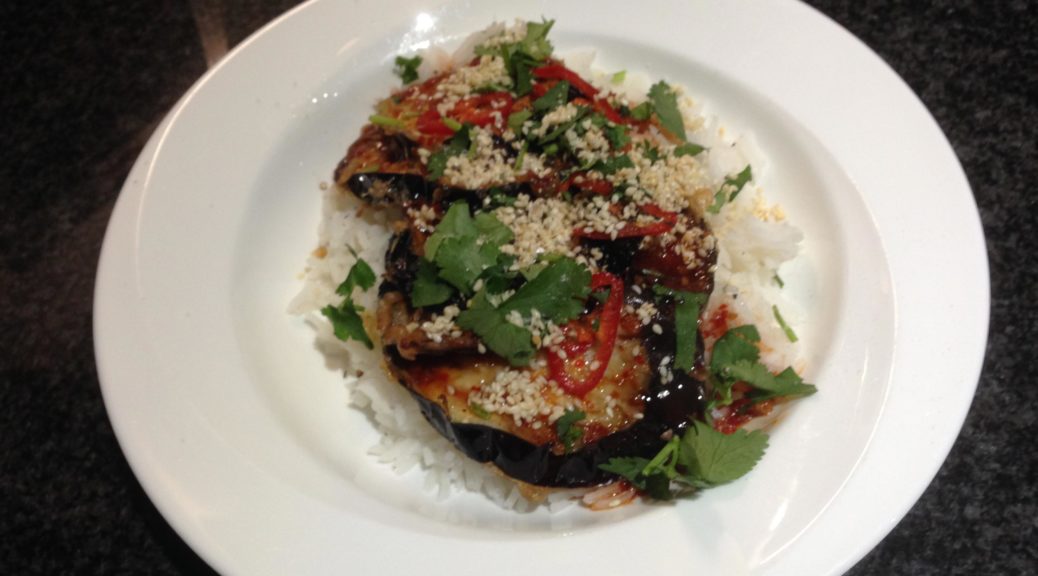
Spicy, sweet and seedy battered veg. Sprinkle with coriander
1 large egg
4tbsp cold water
2 tbsp flour
30g caster sugar
3 tbsp rice wine vinegar
2 tbsp soy sauce
2 tbsp chilli paste
about 250ml oil for deep frying
1-2 aubergine sliced
2tbsp roasted sesame seeds
1 red chilli finely sliced
coriander leaf, chopped
Make a loose batter by whisking together a large egg, 4 tbsp of cold water and 2 tbsp of flour. Salt it lightly and set aside.
Put 30g of sugar into a small saucepan with 3 tbsp of rice wine vinegar, 2 tbsp of light soy sauce, and 2 lightly heaped tbsp of chilli paste. Bring to the boil, then remove from the heat and put to one side.
Tip 2 tbsp of sesame seeds into a small, shallow pan and toast over a moderate heat until fragrant and walnut brown. Remove the pan from the heat. Slice 400g of aubergines in half and then into segments, about 6 per fruit. Heat about 250ml of oil in a small, deep pan, to no lower than 160C then, when it is thoroughly hot, dip the aubergine pieces in the batter one by one, and lower them carefully into the oil.
Cook for 5 minutes or until the outer batter is crisp, the inner flesh soft as marshmallow. Drain each piece briefly on kitchen paper then trickle with the hot chilli sauce and sprinkle over some of the sesame seeds, a little coriander for those who like it, and perhaps a small, ripe chilli, sliced thin.
You could prepare artichokes in the same way. Use those that come marinated in oil, wiping them first then dipping into the batter as you would the aubergines.
One of my daughters is at university whilst the other will probably leave for university this September. I don’t like to think about the latter. I’m busy pretending to myself that my babies still live at home, whilst also, and in an entirely contradictory manner, congratulating them on growing into such wonderful women. But probably, by the end of the year, we will have two semi-adult, semi-independent children living away from home, and that costs money.
There is a debate at the moment about student fees in the UK. Changes in the way the UK finances tertiary education mean that we now have the most expensive undergraduate courses in the world.
University coasts break down into two component parts: fees for tuition and maintenance.
In England annual university fees are now £9250 a year. The loans are “owned” by a private company and the interest rate charged, which accrues from the minute that you first take out the loan, is around 6% making for a cost of more than £555 a year for the start of your course.
However large the loan is that you build up, let’s say £27,750 capital over three years plus interest accrued £3,465 by the end of a three year course i.e. £31,215, you will only start repaying it when you earn more than £21,000. repayment is charged through the UK payroll system of taxes (PAYE) at a rate of 9% pa. on top of the standard UK income tax rates. This additional tax is paid until either the loan is paid off or 30 years have passed, in which case any outstanding amount is written off.
So it’s an expensive business having children at university. When I consider the rather measly 6 hours contact time my eldest enjoys at university, the cost is only bearable when viewed as compensating or supplementing the 35+hours that her sister will require.
It costs roughly the same amount again for maintenance i.e. accommodation etc so in reality many children will end up with debts of around £60,000.
And since the loans are only repaid over a certain income threshold, and since many women will take a career break to have kids and return to work only part-time, a substantial proportion of the loan balance will never be repaid (around 45% of the total loan portfolio). This unpaid balance is building up, but ultimately will be the responsibility of the government ie. all tax payers, graduates or otherwise to repay.
We decided to pay for our children’s maintenance ourselves, and are obviously lucky enough to afford to do so. But we decided to encourage our daughters to take out a student loan for the fees. A number of friends find this decision incomprehensible with one going so far as to ask how we could do such a thing, having happily paid for our children to attend private schools as if they were one and the same issue.
Hmm.
In the UK we have seen a vast expansion of university places such that the number of children attending university has risen from around 20% to 50% of the population. And that expansion has been funded largely by the rise in student fees. Calls to reduce or remove fees entirely, seem to ignore the consequence of cutting places for students to study. The country could not afford to pay for 50% of kids to attend to university if it was all paid for by central government.
And so you see a rise in the number of people suggesting that it would okay to restrict university places, because university should not be the be-all and end-all. University, apparently, is not right for everyone and we have gone too far in suggesting that it is.
My problem with this argument, is that it seems to be made mostly by people who have no doubt that their children will attend university, come what may. University may not be for everyone else’s kids, but it most definitely is the right place for their kids. other people’s kids can grow up to be plumbers and electricians. Their kids will grow up to be middle-managers, lawyers, doctors etc.
Because when people of my generation went to university, there was an obvious restriction on the number of places at university. And that had consequences. Most of the people I know now, went to very safe, very middle-class schools, private or grammar. Almost everyone they knew as kids went to university, and the idea that they were part of only 20% of the population doesn’t really ring true for them. I went to a very poor working class comprehensive state school. Out of a school year with around 180 pupils, around around 4 of us went to university. So whilst almost 100% of my middle class friends’ classes went to university, just 2% of my peers managed to make it to university.
Any suggestion that we should cut back on university places, inevitably means cutbacks for the working class, for the poorest amongst us.
So my children will take out student loans that will be expensive and unwieldy to pay back, because in part this will fund kids’ education who could not afford to attend university without a loans system.
They will also take out student loans, because at some level, knowing that they personally are paying for their university course, will hopefully encourage them to try and get the best value out of their course. It will give them some skin in the educational game.
Maybe.
I’m told that all young kids want to do is chill out and get pissed, that the loan is somethings they will simply write-off or ignore. It seems to me that some kids will be like this and some won’t. I’m hopeful that my kids have been raised with a greater sense of responsibility but also believe that times have changed and this generation of young people is incredibly more hard-working and focused than our generation ever was.
Either way it has nothing to do with paying private school fees which are absolutely indefensible from a moral societal perspective. People pay for private schools because they believe it will advantage their kids in some way, much as any other selection process within education privileges children. We paid for private education because we wanted both girls to attend single-sex schools, to be within a highly motivated, focused and quite narrow academic stream and obviously because we likes the additional facilities that mad wit easier for the kids to study and study well.
We had the money and were willing to spend it. Other people without the money, make different choices where they can such as sitting for competitive grammar schools etc. There is no moral high ground in terms of selective education.
& it would be stupid to pretend otherwise, I have voted and will continue to vote for a government willing to abolish all types of selective education, whether academic or faith. But whilst it’s available, we made use of the advantage it could offer our daughters.
And the privilege we are willing to offer our kids continues unabated. If my girls want to study for masters or doctorates because they’re enjoying their academic studies that much, then they’ll be able to do so, financed by the bank of mum and dad. If they want to live and work in London, we will help them do so again, financed by the bank of mum and dad.
& at the back of my mind is the knowledge that other people’s children don’t have those choices. The world of work is narrowing; the middle classes are contracting. I want my girls to be happy but, like most parents, I need them to be safe first and foremost.
Because ultimately money is just a tool, a way to afford a life you want to live and we want to live close to our children and for them to be happy (in the hop that th two are not incompatible). Happiness wasn’t a factor in our decision making when we were younger. We had to earn money to live. Now that we have the money, I’d like my daughters to have broader choices, to have a safety net to catch them if those choices don’t work out.
Politics is depressing at the moment, which is one of the reason for all of the new recipes. When in doubt, cook.
Life is depressing because it seems increasingly clear that the divisions within the government and within the country as a whole, identified and exacerbated by the EU referendum, are wider than ever. And no matter what the outcome, that means half of the electorate is left seriously angry and upset about the outcome.
Immediately after the referendum it was possible for the government to take a deep breath, pause and hold some open house meetings up and down the country to try and work out the answers to some really basic questions.
Why did people vote “leave” in such large numbers?
What exactly did they believe they were voting for, out of the EU, out of the single market and out of the customs union? All of these or just one or two?
And how much are they willing to pay for the privilege?
I might want lots of things, but if it starts to cost me more money than I’ve got, I start to temper my request. People did not vote to become even poorer. They did not vote to lose their jobs.
Anyway of course this is all water under the bridge because in the shock and panic immediately after the referendum result, the one striking absence in our political life was leadership.
Most of the people responsible just ran away from the responsibility of making it work. the PM resigned. The Chancellor followed shortly thereafter. After a shocked press conference, the main leaders of the “leave” campaign very publicly stabbed each other in the back making them unelectable to the leadership they both wanted.
So we ended up with a “safe pair of hands” otherwise known as Theresa May, who I have some sympathy for still.
I can believe that she is a woman with ambitions. No woman gets to succeed in such a bear pit without ambition and a sizeable amount of competence. So she probably wanted the job at first. As did her carefully balance first cabinet. The brexit campaigning ministers David Davis and Liam Fox seemed positively cock-a-hoop with their success, as did the less than convinced by brexit Chancellor, Hammond.
But as time goes by, and in particular as the reality of a very mis-judged election have hit home, any successful outcome for brexit has retreated further and further away from achievable. The PM was not poorly advised to call an election necessarily, since her lead in the polls was convincing.
But the campaign was poorly coordinated and risked alienating anyone who had voted “remain” with its harder than hard brexit stance. We may all be parroting the “will of the people” when describing the mandate to leave the EU, but they also needed to remember the 48% of the electorate who voted remain and who either stayed home or voted with the opposition party, wiping out the government’s majority and forcing them to form an alliance with the N Ireland DUP.
The latter make any compromise agreement on the Irish border with the EU almost unachievable. The one gaping big hole in the brexit “leave” campaign “what about Ireland” suddenly comes front forward into focus. The DUP will not tolerate the idea of “special status” where N ireland becomes more closely tied to the Republic of Ireland and less tied to the Union. At the same time it cannot abide a hard border between the two Irish halves.
The N Irish electorate voted “remain” and their economy, already weak and relatively poor in UK terms is inextricably tied to it’s southern neighbour. so the UK is forced into agreeing with the EU that there will be no hard border and that we will remain in “regulatory alignment” going forward and that looks and sounds very like a customs union.
Yes, say the government A customs union but not THE customs union, and one is left wondering how thin they can slice that hair. If it looks like a duck, if it quacks like a duck etc. Because if the UK is unable to make independent trade deals with third party countries, then what on earth is the point of leaving? And a fundamental part of any customs union is centralised negotiations of trade deals with third party countries.
It’s a difficult circle to square. & with a minority government, all legislation requires the positive consent of the DUP, a party to whom this trickiest of problems is fundamental. Suggestions and hints from David Davis that the government commitments were in some way just a “fudge” were immediately knocked back by the EU who threatened to write them into the contract prior to trade negotiations.
So now here we are with a UK government about to start trade negotiations having unilaterally decided to leave the single market and the customs union, looking for a trade deal of some sort, yet unable to define that trade deal because of the conflicting requirements within it’s own party. The loudest voices on the topic are noticeably from outside the government itself, from party members who have yet to come to terms with the reality of minority rule. The loudest voices seem entirely unconcerned with what can be practically delivered.
& you have the EU basically asking the UK to simply define what they want coherently so that negotiations can begin whilst refusing to schedule time for meetings, until such clarity can be provided.
So I’m coming to the view that we will bomb out of the EU onto WTO rules, which will lead to a hard border in Ireland, not because either the UK or EU want a border, but because basic WTO rules require the EU to have a border with third party countries absent a customs union or comprehensive trade deal.
And as well as leaving the EU, we are leaving the 970 bilateral treaties the EU has with third party countries such as the US and China. It might be hoped that these would be simple agreements to transfer to a newly independent UK but at least some of the countries involved (SKorea, Chile etc) have indicated that they would want to look again at the terms. there is no guarantee that the deals will be so favourable for the UK standing outside of the EU.
It’s all a bit depressing really, just a little bit rubbishy.
With its searing chilli, ginger and garlic enveloped by a blanket of noodles and coconut soup, I think laksa is a wonderful antidote to colds and cold weather. I urge any swede-dodgers to think twice about today’s recipe: its buttery earthiness, alongside the caramelised shallots, adds a sweet and smoky magic.
Laksa
Prep 12 min
Cooking 45 min
Serves 4 6 garlic cloves, peeled and roughly chopped 3cm ginger, peeled and roughly chopped 4 tsp Kashmiri chilli powder 2½ tsp ground cumin 2 lemongrass stalks, bases only, roughly chopped 30g fresh coriander, leaves and stalks 6 banana shallots, peeled and halved 1 litre vegetable stock (suitable for vegans) Rapeseed oil 1 x 400ml tin coconut milk 1½ tsp salt 1½ tsp sugar 800g root or comfort vegetable eg. potato, butternut quash, swede (ie, about ¾ of a large one), peeled 150g rice vermicelli noodles 2 limes, cut into 4 wedges each
Heat the oven to 200C/390F/gas mark 6 and line two large baking trays with foil.
To make the laksa paste, put the garlic, ginger, chilli powder, ground cumin, lemongrass, coriander stalks and two shallots into a blender with 150ml stock, and whizz to a paste.
Heat two tablespoons of oil in a deep-sided pot on a low flame and, once hot, scrape the paste into the pot. Cook for 10-15 minutes, stirring regularly so it doesn’t catch, then slowly add the coconut milk until it’s well mixed in. Add the remaining stock, the salt and the sugar, and simmer for 20 minutes until rich and flavourful. Season to taste, then take off the heat.
While the soup is cooking, halve the root vegetable, say swede, cut it into 1cm-thick slices, then arrange on one of the lined trays. Separate the remaining shallots into “petals” by halving them and removing the individual segments, and put these on the second lined tray. Lightly drizzle oil over both vegetables, toss with your hands so they’re well coated, and sprinkle with a little salt. Roast the shallots for 20 minutes and the root vegetable for 30, until cooked and caramelised.
Cook the noodles in boiling water as per the packet instructions (usually two to three minutes), then drain and rinse under cold water.
To serve, reheat the soup on a medium heat, if need be. Distribute the noodles between four bowls and ladle on the hot soup. Put the hot swede and caramelised shallots on top and sprinkle with coriander leaves. Squeeze a wedge of lime over each serving, and serve with more lime on the side.
It’s all turning out a bit rubbishy, this brexit. I’ve been cooking a lot to try and distract myself from it all. Even the government’s own forecasts suggest the economy will be screwed for the next 15 years at least. We’re lucky: my family can possibly afford the 8% cut.
It also makes clear that there’s a real trade-off between the country’s independence and financial well-being. The further away from our nearest and richest neighbour that we want to be, the more it will cost.
Over at the Daily Express and well-outside of my normal Guardian, FT and NYT stomping grounds, nobody seems to care much about the cost, not at first. Or if they do care, they blame it on the Tories currently in power first of all and somehow expect a second wave of more extreme brexit-MPs to make it all better.
The leading brexiteers in government have one and all fallen silent or unashamedly contradictory.
So when questioned by parliamentary committee about his contradictory statements, the brexit minister feels no shame at saying “That was then, this is now” about various comments he once made suggesting negotiations would be quick or easy or even advantageous. Arch-brexiteer Liam Fox, tasked with leading the department looking to set up new treaties with non-EU countries has been described by the NAO as woefully unprepared and under-resourced for the job ahead.
And it isn’t even about trade. The EU has around 1,000 bilateral treaties with third party countries such as the US, Chnia etc. that we currently benefit from. Some of them will be about trade, but plenty will cover other topics such as access to airspace, territorial waters, health and safety standards, security issues and information sharing. Almost all of our interactions with other countries are under-pinned by treaties made via the EU.
And we’re leaving that all behind. As the EU pointed out earlier this week, there is no guarantee that the third party countries will be willing to offer us the same terms once we’re out of the EU.
Even Liam Fox has told brexiteers outside of the government to develop a more realistic view of the process now that the minority government is basically propped up by the Irish DUP.
The prime minister didn’t have to call an election, but by doing so she managed to lose her (slim) majority. So now the DUP have the right veto over all the UK legislation, and they can never approve of anything that leads to a hard border in Ireland.
& that means that the UK minority government will be held to its Irish promises, to have an open border and regulatory alignment with the EU. That’s a commitment to follow all of the EU rules and regulations with absolutely no say over how they’re written. An open border in Ireland makes a mockery of the idea of limiting EU immigration. Forever.
So much for taking back control.
It’s all looking a bit rubbishy, and even over in the Express and the Mail, that’s getting harder to hide.
Sformata is an Italian dish, similar to a souffle or rather like a baked flan but without the pastry shell – the word sformata means misshapen. Leafy greens like spinach or chard have a real affinity with the soft, fragrant taste of marjoram or oregano.
Serves 4 unsalted butter 1 tsp, plus extra
to butter the dish parmesan 50g, grated spinach 500g, washed and large stalks removed sea salt and freshly ground black pepper ricotta 300g eggs 6 creme fraiche 300g nutmeg a few gratings fresh marjoram or oregano 2 tbsp chopped – or 1 tbsp of sage, shredded really finely, preferably fried, or 1 tbsp thyme fried briefly in butter so it becomes crisp before being added
Preheat the oven to 200C/gas mark 6. Butter an oval 30×20cm ovenproof baking dish and dust all over with a tablespoon of the grated parmesan.
Melt the teaspoon of butter in a large, lidded pan and throw in the spinach with just the water clinging to its leaves. Season with salt and pepper, stir briefly then put on a lid so it steams and wilts, this should take about 2 minutes.
Tip the cooked spinach into a sieve and squeeze any excess moisture out, before chopping roughly.
In a bowl, whisk the ricotta to break up any lumps, add the eggs and continue whisking so that bubbles form. Stir in the creme fraiche, a few gratings of nutmeg, the marjoram and remaining parmesan. Finally stir in the chopped spinach and pour into the prepared dish.
Bake in the preheated oven for 25 minutes or until the top is slightly risen and browned and the centre of the sformata feels slightly firm to the touch.
Like many people I’ve visited America on holiday, even to visit friends working over there, but usually to the easy bits, the edges where most people are white, wealthy, liberals who tend to have some of their own international holidays under their belts.
Even so, there are some things about America, even these most similar bits which are just a little bit weird and wonderful to the average British visitor; not bad, just a little bit peculiar.
1. “How are you” as a greeting, not a question
When a sales clerk in the States says “how are you” it’s not a question, but a way of saying “hello.” No matter how often this happens to a Brit, they will launch into a monologue about their health and well being and ask it right back — and expect an answer.
2. Ice cubes & free refills
Just like Americans are flummoxed by the lukewarm water presented to them in the UK, Brits can’t wrap their heads around how drinks in the US are mostly ice. And what about those free refills? Is this because of all the ice? I will never understand why I’m presented with a second cup of pop (soda) while the first one is still half full in front of me. What’s even stranger though, is the fact that one can (and does) order a large soda — despite the refills.
3. Portion sizes
They’re huge! Doggy bags are obviously a compensation — though who orders a two-for-one meal ? — but the concept doesn’t exist outside of the US, as people can generally easily finish their meal. And what’s with the question “Are you still working on that?” If it’s work finishing a meal that I’ve ordered for pleasure, then something has definitely gone wrong.
4. Infinite Choice
White, whole wheat, sourdough or rye bread? Swiss, American, provolone or cheddar? Most Brits feel accosted when bombarded with 12,857 questions when they just want to order a simple sandwich. Visiting supermarkets is a similar chore. How can you have so many versions of some things, say milk, or flavoured yoghurt, yet have next to no choice on apples, cheese or plain natural yoghurt?
Why is it so difficult to find plain foodstuffs like butter, and what on earth do you do to cottage cheese which is somehow an entirely different texture to the UK version?
& what is that stuff you call chocolate? It wouldn’t qualify in Europe or the UK. Somehow you have managed to make chocolate chalky, neither bitter nor sweet enough.
5. Tipping
The fact that the onus is on the customer to pay for someone else’s employees to make a fair wage is mind boggling to most Europeans. The fact that they’re paying extra for someone to do their job, not even for doing it well, is astounding. Europeans also find it confusing that there’s no set amount or percentage one should tip, and who gets tipped seems equally ambiguous.
6. Taxes
Annual taxes are hard for everyone, but that’s different. What’s just weird is the fact that the price you see on an item is not the same one you pay at checkout. How is that reasonable?
7. Being cashless
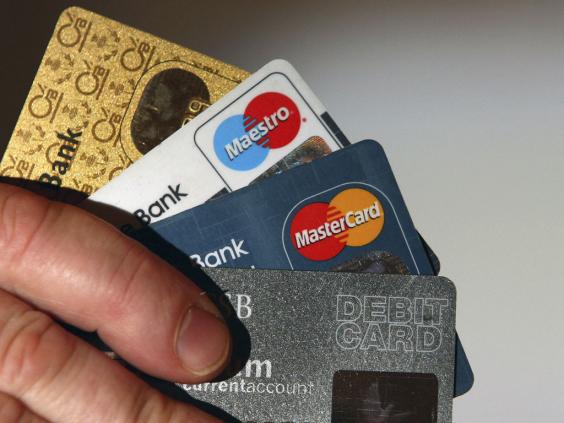
Few Europeans wander about with wallets utterly devoid of cash, but America is basically a cashless society. Being able to pay for as little as a pack of chewing gum with a card is still amazing to most Europeans.
Being able to use a credit card without having to type in a PIN, just using a signature, feels crazy.
8. The measurement system
It just makes no sense. How is 7/8ths an appropriate measurement? How are feet still a thing? Who knows what size a “cup” is? How can America still not have the basic metric system that the rest of the world has adopted? Why?
9. Air conditioning
Why is the average shop or office in the US set to Arctic? Indoors anywhere in America during the summer is painfully, unbearably cold to a typical European and you have to spend all of your time putting layers on and off as you move from the boiling heat to the freezing cold.
10. The drinking age
In most of Europe, the legal drinking age is 18 (and in many places, it’s legal for teens as young as 16 to drink alcohol) — much younger than the 21-age limit it is in the US. The UK also has a much more liberal stance on public drinking, as you are allowed to bring alcohol out on the streets — something that you generally can’t do in the US.
9. Car Size
Why do Americans all drive such huge cars and without manual gears? If you’re going to have automatic cars only, at least make them change gears properly so you can accelerate with a bit of va-va-voom. Most of us in the UK are used to driving on the “wrong” side of the road in Europe, but the sheer size of cars in America seems unreasonable especially in cities.
& then there is the absence of the roundabout, even with traffic lights to control the flow as often happens in Europe. Instead there are “four way stops” where you have to guess the etiquette on who goes first, presumably the first to arrive rather than always the car to the left.
Why are u-turns illegal manoeuvres? What’s with the constant honking of horns in the city? Why do traffic lights jump straight from green to red – where is your amber warning light? & where are your cat’s eyes for the middle of the road?
9. Public Transport
Why are there so few buses, trams or trains outside of the major cities? Most of the towns seem to be entirely lacking in public transport and dominated by car parking. There seem to be entire towns with no centre or walkable space, not even the ability to cross the road from one side to another.
10. Police with guns; people with guns; random strangers potentially with guns
Occasionally the police in the UK are armed but rarely and mainly at sites of special interest (Parliament or other government buildings, airports if there’s been an alert etc). Why on earth do American police need to carry guns all of the time? Being pulled over because you’ve just completed an illegal u-turn in your clumsy American car by a man with a gun is seriously freaky.
The thought that anyone around you could have a concealed permit and be carrying a gun is beyond scary. The world is full of nutters so why arm them?
11. Not taking holidays
Squandering 169 million holidays like Americans did in 2013, or not taking a single day off like almost half the country last year is completely and utterly unfathomable to a European. Any European.
12. No maternity or paternity leave
I’m fairly sure that Americans have babies just like the rest of us, so why on earth not acknowledge the basic fact with some weeks paid leave?
13. Not retiring
Most people in the UK can barely wait for their retirement. Retiring early, i.e. in their 50s, is the dream of most middle class workers over here, so the idea that people might choose to work past their 60s into their 70s and beyond is beyond belief. In the UK there is more status to retiring early, the working in any kind of job, no matter how high status or well-paid, with the possible exception of the judiciary and academia.
14. Talking about money
No one in the UK will talk about salaries where as it seems to happen quite a lot in America. In the UK the proxy conversation is about house prices – never ask a Brit how much they earn or how well they are doing, because it will just create an embarrassed change of subject but you can always ask about house prices in their neighbourhood.
15. Scheduling Social Engagements
For child playdates in the UK, mostly there will be a start and an end time such as 3-6pm, but only in America have I ever come across an end-time for an adult social engagement e.g. a party from 7-10pm where people are actually supposed to stop and leave, at the time specified even if they’re in the middle of having a great time. It makes absolutely no sense to put and end time on an adult event rather than simply letting the event run for as long as people are having fun.
Partly this might be because almost no one arrives on time in the UK. An invitation for 6pm is almost universally interpreted as a 6:15pm start time with some people arriving upto 6:30. There is never an end time for adult events – though when the host hands out the coffee you should be thinking about it, and when they start clearing up, it’s time to ask for your coat.
16. American religion
Everyone in America seems to belong to a church, a temple or mosque and they actually goes once a week. Much of the weekly social life seems to be built around a family’s faith, with weekly fetes, bake offs, pray-ins etc. Perhaps even more peculiarly, a lack of faith is somehow considered edgy or cosmopolitan in America.
In the UK, the vast majority of people have no religious faith whatsoever. None. Having a religion, and actually attending is considered unusual or “edgy”. It’s also the last thing that people will talk about. Your faith is your own business and no one else’s.
16. American only games
What is the basic point of baseball? It looks like rounders ie. a “girls” game but seems to have a huge cult macho following.
And what’s with American football? That’s not football (soccer) as the rest of the world understands it. It looks more like some weird and wonderful top of rugby only one where you need twice the number players to play a single game.
17. American bathrooms
British plumbing is not great but mostly if you flush it, it stays flushed. American plumbing, or at least the drains, seem extraordinarily sensitive to blockages. In the UK there are problems because of the sheer age of the sewage system but America does not have the same excuses since it’s all relatively new, so why do toilets always seem to be on the verge of blocking?
& what is with the size of American baths? You could just about sit (upright) in most of them, certainly not lounge about and relax with some scented candles around the room. Don’t Americans have baths? Are they so time-short that everyone just showers?
18. American kitchens
Stove top kettles are slow compared to electric ones, but obviously the US doesn’t have a high enough voltage to power electric kettles. Why? All of the small appliances are slower as a result.
18. American nationalism
Every school child in America seems to start the day with a pledge of allegiance to the American flag. Every event, sporting or otherwise, seems to involve singing the national anthem, with your hand on heart. This is deeply weird to the British on a number of levels.
Everyone knows the American anthem where as no one in Britain can get beyond the first verse apart from he royal family (for obvious reasons).
What’s with the hand on heart? Mostly in the UK people shuffle around looking embarrassed or give it a good belting shout out right up to the point when they’ve forgotten to the words and then start shuffling.
The idea that one would pledge allegiance to ones country as a child, each and every day, screams “totalitarian brain washing” to most people in the UK. Mostly the British spend their time making fun of the idea of being British, whilst being secretly pleased to have been born here. We are simultaneously proud and embarrassed by our country.
We know we are small, and have fallen far from power, but since that power inevitably involved a lot of abuses and bad behaviour on our part, we’re quite relieved to be a bit beyond that stage. Part of being the universal policemen, is the hatred as well as the respect.
You might not have seen the road accident between the cab and the cyclist, but I did. Driving up to the mini-roundabout and slowing down to turn right, I could see the cab some way in front doing a u-turn and just clip the cyclist coming out from the road on the right. Already stopped and waiting to turn, I rolled down my window to ask if the cyclist was okay.
I did this for a couple of reasons: I wanted to know if help was needed, and I wanted the cab to know that there was a witness so they took it seriously. I could hear someone beeping from behind which made it difficult to hear the cyclist. After a second shout from me, he waved to say he was okay, and I drove off reassured nothing too bad had happened. The whole thing took maybe 30 seconds.
But as I’m turning on the roundabout, the beeping didn’t stop. Turned onto my road, it just got louder, and looking into my mirror, all I can see is a huge big black range rover maybe centimetres away from my tiny car’s bumper, lights bright and dazzling.
So I slowed my car down and stopped. I got out of my car. Because I am a fool but also because at the point there was some basic chance that you’d seen some problem with my car (or the accident) that I needed to know about.
You came hurtling out of your car towards me, swearing and calling me names, telling to speed up. I was no more than ten metres from the roundabout so it’s a bit difficult to see how I could have been going faster. I asked if you’d missed the accident, if maybe you hadn’t seen what was going on? You didn’t stop for breath. The accident was not my business. I needed to drive faster. You threatened to hit me.
I stepped forwards. You stepped back. (Again – I’m a fool, something historic about childhood abuse we don’t need to worry about here has clearly hard-wired the wrong responses).
I told you that I was not in a hurry, that accidents were most definitely everyone’s business and responsibility to help. I asked him what was his problem? I was told to fuck off.
I urned to get into my car and he got into his. As I’m walking back maybe two steps, I feel his range rover pushing into my back. I stop and am forced one step forwards by his car. I turn and put my hands on the bonnet of his car.
“Really? You’re going to run a woman over because you’re in a hurry to get to work? Seriously”
I walked towards you and tapped on your window to ask you to run down your window. & bizarrely you did.
“I’d like to know your name”
You stopped swearing immediately and just stared straight ahead. There was a pause.
“Because you don’t seem safe to drive and I’m thinking of reporting you to the police”
“Fuck off”
A car from behind realising that though stopped, I hadn’t actually blocked the road, pulled around us. Realising you could do the same, you reversed and pulled away into the distance.
Leaving me shaking.
& seriously hoping that this not part of my character that either of my kids have inherited because, let’s face it, I was mad as a hatter to get out of the car in the first place.
But also left wondering how on earth you square what you have just done with living the rest of your everyday life today.
You were white, middle aged, maybe in your 40s, and well-to do, probably just short of 6ft tall with brown eyes, dark brown hair and a darker complexion. At a guess, I’d say you were of sephardi or arabic extraction but your accent was clearly well-to-do North London.
You probably know some of my friends. We might well meet again. Socially.
& you threatened to hit and then run over a total stranger, me, on a dark road in the middle of my suburb because you were in a hurry to get to work at 7:45 one rainy morning. What does that make you? You couldn’t care less about a potentially life threatening road accident you were driving past, because you were just too damn angry at being made to wait less than a minute.
Do you have a wife and kids at home that have to live with that anger of yours?
What happens if next time, the road accident involves your family, your wife, your child, your mother? Or does it only count if it’s you? Maybe you’re the cause of the “accidents” whether to strangers or family. How often has your wife been in the local A&E?
In our own lives, we all like to think that we are heroes, we all try to spin the stories we tell ourselves to the best, most flattering light. Yet I can’t see anyway that this event can be spun to make you look good to yourself. There is no way that threatening to hit and then drive over a smallish woman on a dark road, on the way to work can ever be made into a tale where you are the hero.
You are a road rage nutter, dangerous to everyone that you come into contact with, not least yourself, and one day you will pay the price.
Like a lot of people at this time of year, I have a cold and it’s making me miserable.
It is just a cold. Just a misery inducing, bundle of aches and pains, with added sinus issues. It is not flu. Flu involves a raised temperature and I know that I haven’t got one of those because I live with someone who always has a thermometer to hand. Always.
In their mind, if you don’t have a temperature then you’re not properly ill which, as you can imagine, certainly adds to the joy.
To be accurate, I am now on my second cold having had one before Christmas for a couple of weeks, recovered and then gone down with the one my daughter brought home from university. I love both of my children but they are absolutely death traps when it comes to catching everyday diseases.
But I am recovering or at least felt like I was recovering until the joys of the peri-menopause joined the party. Combine a bad cold with haemorrhaging blood from your nethers, flooding style, and suddenly HRT starts to sound attractive. If only you didn’t have to go through the whole thing as soon as you stop taking the meds.
& at the worst of it, there’s an article in the paper talking about how maybe the workplace should start to cut peri-menopausal women some slack. Cue endless comments about how trivial the whole event is and maybe we should start talking about men more. because obviously it’s all about the men, even the menopause.
Well, the day I see a man with blood shooting out of his arse (or any other orifice) with enough force to push his pants down to his knees, leaving him blood stained from crotch to knee, I shall certainly be sympathetic. But strangely enough, I believe that I’d probably be pushed to one side by people rushing to get him to an ambulance, possibly crushing the numerous women who have had similar experiences to the floor, in the effort to get the poor flower to the hospital.
By all means let’s talk about the milder symptoms of menopause, the hot flushes the lack of patience with imbeciles and general rattiness of sleeplessness but let’s not pretend that the last two at least aren’t pretty symptomatic of normal male behaviour.
As I grow older, I am developing more and more of an appreciation of general witchiness but also coming to realise that women giving less of a f*ck, becoming more witchy, are really just starting to own everyday male behaviour. We grow older, become invisible to men, and to be frank care less about the stuff that doesn’t matter and that includes the opinion of strangers.
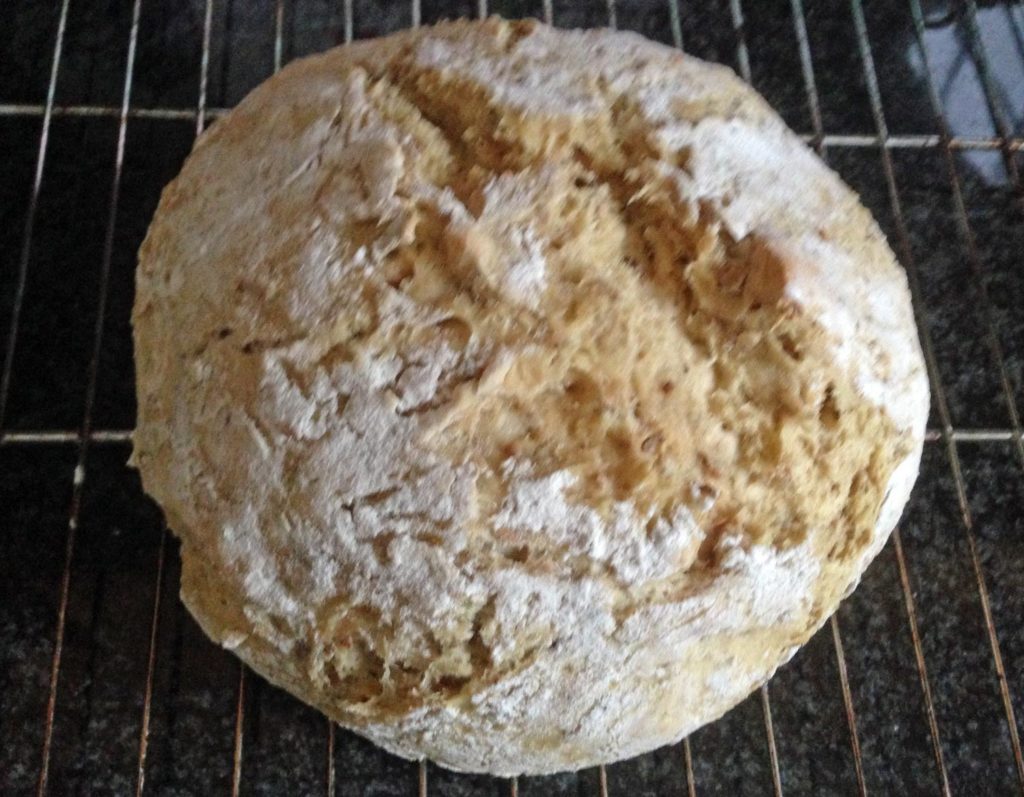
I do like fresh bread, but sometimes you just don’t have the time or the energy, and that’s when soda bread comes into it’s own.
Pumpkin, linseed, sunflower or hemp seeds make for an interesting texture. Linseeds should be crushed to make the most of their plentiful omega-3 fats, but I use them just for their nutty taste and silky texture.
Makes 1 x 500g loaf wholemeal flour 225g plain flour 225g bicarbonate of soda 1 tsp sea salt ½ tsp caster sugar 1 tsp golden linseeds 2 tbsp sunflower seeds 2 tbsp hemp seeds 2 tbsp buttermilk 350ml
Set the oven at 220C/gas mark 8. Place a heavy casserole, about 22cm in diameter, together with its lid, in the oven to heat up.
Sieve the flours, bicarbonate of soda and salt into a large bowl. Stir in the caster sugar. Add the linseeds, sunflower and hemp seeds and fold evenly through the flour. Pour in the buttermilk and mix thoroughly to a slightly sticky dough.
Dust a pastry board or the work surface generously with flour. Working fairly quickly, pat the dough into a round large enough to fit snugly into the casserole. Remove the hot pan from the oven, dust it generously with flour, which will prevent the loaf from sticking, then lower the dough into the casserole. Cover with a lid, then return to the oven and bake for 25 minutes.
Remove the dish from the oven and leave to rest for 10 minutes before freeing the loaf and placing on a rack to cool.
All about me!
This website uses cookies to improve your experience. We'll assume you're ok with this, but you can opt-out if you wish.AcceptRejectRead More
Privacy & Cookies Policy
Privacy Overview
This website uses cookies to improve your experience while you navigate through the website. Out of these, the cookies that are categorized as necessary are stored on your browser as they are essential for the working of basic functionalities of the website. We also use third-party cookies that help us analyze and understand how you use this website. These cookies will be stored in your browser only with your consent. You also have the option to opt-out of these cookies. But opting out of some of these cookies may affect your browsing experience.
Necessary cookies are absolutely essential for the website to function properly. This category only includes cookies that ensures basic functionalities and security features of the website. These cookies do not store any personal information.
Any cookies that may not be particularly necessary for the website to function and is used specifically to collect user personal data via analytics, ads, other embedded contents are termed as non-necessary cookies. It is mandatory to procure user consent prior to running these cookies on your website.
Manage Cookie Consent
To provide the best experiences, we use technologies like cookies to store and/or access device information. Consenting to these technologies will allow us to process data such as browsing behavior or unique IDs on this site. Not consenting or withdrawing consent, may adversely affect certain features and functions.
Functional
Always active
The technical storage or access is strictly necessary for the legitimate purpose of enabling the use of a specific service explicitly requested by the subscriber or user, or for the sole purpose of carrying out the transmission of a communication over an electronic communications network.
Preferences
The technical storage or access is necessary for the legitimate purpose of storing preferences that are not requested by the subscriber or user.
Statistics
The technical storage or access that is used exclusively for statistical purposes.The technical storage or access that is used exclusively for anonymous statistical purposes. Without a subpoena, voluntary compliance on the part of your Internet Service Provider, or additional records from a third party, information stored or retrieved for this purpose alone cannot usually be used to identify you.
Marketing
The technical storage or access is required to create user profiles to send advertising, or to track the user on a website or across several websites for similar marketing purposes.