Garden plans

It should be possible to just sit back and enjoy a garden but I’m not quite able to do that. It’s Spring and the garden has been lovely, but even so there are gaps to be filled.

In general, white flowers have proved successful in this garden against a green background.

The crocus have been beautiful, white and purple, but it would be nice to see more of them, especially white up on the roof in the gravel garden.

The miniature iris have been and gone, but there are fewer this year than last so I’d like to see clumps of them also, especially in the gravel. Iris reticulate Blue Note are on the shopping list

The white windflowers have appeared and are wonderful, but there could be more in the borders at the front of the house and along under the hedge to the right of the garden.

& some tulips are just about starting to appear, red and tiny in the gravel – let’s have some ore of them too. Tulip Montana might be worth buying and planting in clump

The violas and cyclamen bought as bedding last Autumn are still flowering and lovely so maybe I should try them again.

But mainly I’m waiting until the end of April to order replacements for some of the plants that died in the dry heat of last year’s Summer, watching the gravel garden carefully to see what rises after the stripping and re-planting

Lemon Snacking Cake With Coconut Glaze

A good cake for afternoon tea.

  • TIME1 hour, plus cooling
Lemon Snacking Cake With Coconut Glaze

INGREDIENTS

FOR THE CAKE:

  • ½ cup/120 milliliters neutral oil, such as grapeseed or canola, plus more for pan
  • 3 lemons
  • ½ cup/120 milliliters sour cream
  • ¼ cup/60 milliliters coconut milk
  • 2 large eggs
  • 1 ½ cups/185 grams all-purpose flour
  • 1 ¼ cups/250 grams granulated sugar
  • 1 teaspoon baking powder
  • ¼ teaspoon baking soda
  • ½ teaspoon fine sea salt
  • ½ packed cup/50 grams shredded sweetened coconut

FOR THE GLAZE:

  • 3 tablespoons coconut milk
  • 1 tablespoon coconut oil, melted
  •  Pinch of fine sea salt
  •  cup/85 grams confectioners’ sugar
  •  Finely grated lemon zest, for garnish
  •  Nutritional Information

PREPARATION

  1. Heat oven to 350 degrees. Grease a 9-by-9-inch pan, and then line with parchment paper, letting the two long ends hang over the edge of the pan by at least 2 inches.
  2. Grate 2 tablespoons of zest from the lemons. Juice the lemons so you have 1/4 cup/60 milliliters juice. Add juice and zest to a medium bowl, then whisk in oil, sour cream, coconut milk and eggs.
  3. In a large bowl, whisk together flour, sugar, baking powder, baking soda and salt. Whisk wet mixture into dry mixture until smooth.
  4. Scrape batter into baking pan and spread in an even layer. Sprinkle evenly with shredded sweetened coconut. Bake until the top of the cake springs back when lightly pressed in the center, and a toothpick inserted in the middle comes out clean, 35 to 45 minutes. Let cool completely.
  5. When cake is cool, make the glaze: In a small bowl, whisk together the coconut milk, oil and salt. Whisk in the confectioners’ sugar until smooth. Pour over the cake, and grate some lemon zest over the top. Let the glaze set for at least 30 minutes before serving.

Expectations

Beyond tired of brexit, like most people however they voted, I still couldn’t describe myself as resigned.

Certainly I would not characterise myself as wanting my MP and the government to push ahead with the current brexit plan to “get it over with” not least because we haven’t even started the trade negotiations with the EU yet so this process is going to run for years.

But I have been trying to work out what to expect next.

There seem to be two scenarios coming into focus: a shitty deal where limits to immigration are prioritised followed by trade in goods or leaving with no deal at all.

Since the UK makes most of its money overseas from trade in services, even with the shotty deal now being discussed, our economy will obviously be damaged and as the negotiations go by, more and more compromises will be required to limit the damage to our economy from setting those two priorities.

Each one of those real-poilitik compromises will be met with horror by those currently cheerleading for brexit. The lack of transparency by the UK government means people have been allowed to keep their illusions so when each and one of those illusions fractures, people will be looking for someone to blame. Never themselves. They will claim that leaving with any deal at all was the mistake, not leaving itself. WTO rules only will become the mantra because unhappiness needs a meaningless slogan to coalesce around.

So politics will stay fundamentally divided and fractious. Society will remain divided and fractious. And people will still split between “remainers” and “leavers”. Economically things will get worse. Nothing will be fixed.

If we leave with no deal at all, then things will get difficult quickly. A developed country will see empty supermarket shelves for the first time in a generation. We will risk medicine shortages and see immediate price rises as WTO tariffs are applied to all imports.

But the world won’t come to an end. We are wealthy and the cost increases won’t stop us eating what we want when we want. Food used to talk cup 30% of people’s disposable income compared to today’s 10% so maybe it will just rise, offset by falling housing costs. Neither will the increased costs stop us taking holidays and living our lives much as today. We will have less but we won’t have nothing. Plenty of people will be significantly worse off. London will be damaged, but it is wealthier and perhaps more able to mitigate that damage.

Our children are maybe now more likely to go and work and live overseas.

We will see a slow decline of our economy relative to the rest of the world. Initially we’ll be able to pretend it’s a worldwide phenomena as we pull the EU down with us, as the US-China trade war starts to bite.

Away from the sheer anger that brexit creates, I’m left with just a sad resignation. For my generation the walls came down, the threat of war receded and we all felt we were going to be richer, healthier and better. For my children’s generation, that is no longer true. The walls are going up, the threat of war is rising and they will be poorer, less healthy and generally worse off.

My expectations are sad.

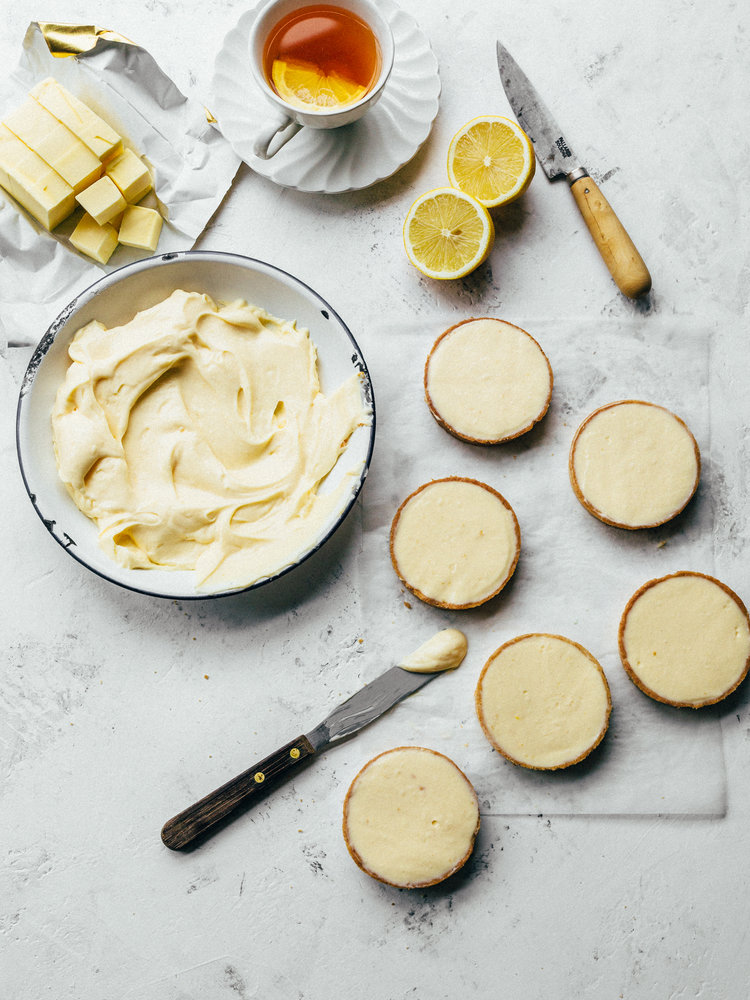
Lemon tarts

It was incredibly difficult to find a simple recipe for basic lemon tarts. This was the best I could find.

Lemon Tarts 2 (1 of 1).jpg

Lemon Cream Tarts
Makes 6

Lemon Cream
150ml lemon juice
zest of 3 lemons
2 large eggs
2 large egg yolks
150g caster sugar
225g unsalted butter, diced and at room temperature

Pate Sucree – just look up the recipe or use basic shortcrust

Start with the lemon cream or curd as it needs ample chilling time before it is ready to use. Add the lemon juice, lemon zest, eggs, egg yolks and caster sugar into a heatproof bowl set over a pan of simmering water and cook, stirring regularly until the mixture reaches 80c on an instant read thermometer. The temperature is key because it needs to be fully cooked like a custard so the finished cream holds the correct texture. I have said here to do this stage in a bain marie but half of the time I just place the ingredients directly into a saucepan and do this over a low heat stirring constantly. It is quicker than the bain marie method but it is also more prone to catching and overcooking so if you decide to do it this way be very careful and keep the heat down low. 

Once the custard is cooked pour it into a large jug, through a fine sieve to remove any cooked egg bits, allowing to cool for 15 minutes, when it should be about 60c. Using some form of blender (traditional jug style or stick blender both work great) blend in the butter a couple piece at a time. If using a stick blender do this in the jug you cooled the curd, the depth of the jug means you won’t end up incorporating too much air which you’re trying to avoid (the same reason it is best not to use a food processor). Once all of the butter has been incorporated pour the cream into a container, press a sheet of clingfilm onto the surface of the custard and refrigerate for at least fours hours, until the mixture thickens up. 

Remove the chilled pastry from the fridge and cut into six equal sized pieces and working with one at a time roll out, on a lightly floured worksurface, until 2-3mm thick. Use to line either six 10cm loose bottomed tart tins or as I do use tart rings, which give a more modern style. Trim off the excess and set onto a parchment lined baking tray. Line each tart with a piece of crumpled parchment paper and fill with rice or baking beans.

Blind bake the tart shells at 190c for about 15/20 minutes before removing the rice and parchment  and baking for a further 10 minutes or until the inside is nice and golden. Once baked set aside to cool. Once ready to serve remove the cream from the fridge and fill the tart shells. Set back in the fridge for about 30 minutes before serving to firm up again.

The cream can be made a few days in advance but once the tart shells are filled with the cream they are best eaten the same day.

Rainy Day, No Sunshine

It has been raining all day, the kind of rain that keeps threatening to stop but never does. Tennis has finally been abandoned so no doubt the rain will stop shortly, just as everyone has moved on.

Sitting typing, writing and generally whiling away the time watching the bird feeders.

The common birds appearing regularly in the garden include:

Blackbird, Blue Tit, Chaffinch, Cuckoo, Great Tit, Green Woodpecker, Herons, Jays, Magpies, Nuthatch, Pigeons, Robins, Rooks, Song Thrush, Sparrows, Wren

And since my feeders hang up in the tree (to keep them safe from cats) it’s always entertaining watching the robins and other ground feeders find their way, following other older birds to precisely the right branch from which to hop across to the food.

Food so close, yet so far

Alas the blackbird knew the route but remained just too large to access the food.

Arancini

Having made risotto for a cold night, and being as yet entirely unable to cut down my recipes for just the two if us now that the girls are away at university, I thought I’d use the leftovers for arancini.

My risotto is always made wet i.e. on the soupy side of acceptable so it did take some drying off, but the recipe for arancini is so straightforward that it seems easy enough to include the risotto recipe as well.

Felicity Cloake's perfect arancini
 Felic

(Makes 10 medium balls)
800ml vegetable stock
250g arborio rice
½ tsp salt
Very generous pinch of saffron
50g parmesan or vegetarian alternative, grated
150g mozzarella, chopped into chunks
Fillings of your choice (meat ragu, pesto, sauteed mushrooms)
1 egg
170g plain flour
500g dried breadcrumbs
Vegetable oil, to cook

If you are using leftover risotto, skip this step. Otherwise, bring the stock to the boil in a medium pan, then tip in the rice, salt and saffron. Bring back up to the boil, then turn down the heat and simmer on a medium heat until the stock has been absorbed. Stir in the grated parmesan and season to taste, then leave to cool completely, preferably in the fridge – you can spread it out on a tray to hasten this if necessary.

Stir the mozzarella into the cool rice and check the seasoning. Roll a tablespoonful between wet palms to form a ball of your chosen size. Poke a hole in the middle and spoon your filling in, then plug the hole with extra rice. Repeat until all the rice is used up.

Beat together the egg, flour and enough water to make a thick batter (about 175ml), and season. Put the breadcrumbs on to a plate.

Heat the oil in a deep pan, no more than a third full, to 170C, or until a breadcrumb sizzles on contact. As it is heating, dip each rice ball into the batter to coat, then into the breadcrumbs, heaping them on top until it is well covered.

Cook in batches until golden brown, making sure the oil comes back up to temperature between batches, and drain on kitchen towel. Sprinkle with a little salt while still warm and serve hot or cold

Butternut and sage galette with orange caramel

For some unfathomable reason, my kitchen has no heating so in Winter it is the least hospitable part of the house. It means that at this time of year, I want to eat hot comforting food but I really don’t want to be cooking too much.

So inevitably I end up cooking too much and using the leftovers to make a meal on the following today, whether that’s boiled potatoes being roasted into a second meal, or as in the case roasted vegetable being used to make a tart on the following day. One of the great advantages of a cold kitchen is that the pastry inevitably turns out to be easy and very short. because it’s a free form tart, it’s quick and easy to knock up.

So either follow the recipe as written and cook the vegetables from fresh, or feel free to use it with any cooked vegetables left over from the ninth before. Butternut squash is great with oranges, but most root vegetables react well to a citrus lift.


Prep 30 min
Cook 1 hr 50 min
Serves 4

For the tart crust
100g plain flour
30g wholemeal flour
20g polenta
1½ tsp caster sugar
¾ tsp flaky salt
1 tbsp sage leaves, finely chopped (about 6 leaves)
80g unsalted butter, fridge-cold and cut into 1½cm cubes
20ml olive oil
60ml ice-cold water

For the filling
1 butternut squash, halved, deseeded and cut into ½cm-thick, skin-on half-moons (680g net weight)
2 carrots, peeled and cut into 1cm rounds 
2 tbsp olive oil, plus extra to finish
2 tbsp finely chopped sage leaves, plus 3 whole, to garnish
2 tsp caraway seeds, toasted and rushed 
Flaky salt and black pepper
1 head garlic, top cut off to expose the bulbs
banana shallot, skin on, top trimmed to expose the flesh
2-3 oranges, zest finely grated, to get 1½ tsp, and juiced, to get 160ml
50ml maple syrup
125g mascarpone
1 small egg, beaten

Heat the oven to 240C (220C fan)/465F/gas 9. For the crust, whisk together the first six ingredients with a good grind of pepper. Add the butter and oil, then incorporate the butter by squashing each cube between your fingers – don’t over-work it, though: you want chunks throughout the dough, so only squash it lightly. Add the water, stir to combine, then use your hands to gather the dough together – it will be quite sticky.

Transfer to a very well-floured work surface and roll into a 28cm x 18cm rectangle, flouring the rolling pin, surface and pastry as you go. Fold the longer ends in towards each other, so they meet in the middle, then roll out once. Now fold in the shorter ends to meet in the middle, roll out once more, then fold in half, so you end up with a square. Use your hands to stretch the dough into a 14cm circle, then wrap in clingfilm and refrigerate for 30 minutes.

While the dough is chilling, toss the squash and carrots in the oil, a tablespoon of chopped sage, the caraway, a teaspoon of salt and plenty of pepper. Spread out on two large oven trays lined with baking paper; don’t worry if there is some overlap. Drizzle the garlic and shallot with a little oil, wrap both separately in foil, and put on one tray.

Roast the butternut and carrots for 25 minutes, or until golden brown, then remove from the oven. Leave the garlic and shallot to roast for 15 minutes more, then remove and, once cool enough to handle, squeeze out the flesh and finely chop. 

Turn down the oven to 220C (200C fan)/425F/gas 7. Transfer the dough to a well-floured surface and roll out into a 30cm circle, dusting the rolling pin as you go. Gently lift the dough on to a baking tray lined with greaseproof paper and refrigerate for another 30 minutes.

Put the orange juice and maple syrup in a medium saucepan on a medium-high heat and cook for about 10 minutes, or until it reduces to the consistency of a thick, sticky syrup.

In a small bowl, mix the mascarpone with the chopped roast garlic and shallot, the orange zest and remaining chopped sage. Season with a pinch of salt and plenty of pepper, and stir again to combine.

Spread the mascarpone mixture over the dough, leaving a 4cm border around the edge. Scatter the butternut and carrot haphazardly over the top, to cover, then drizzle over the orange caramel.

Fold the edges of the pastry up and over the filling, brush the exposed pastry with the egg, then bake for 30 minutes, until crisp and golden brown. Leave to cool for 20 minutes, then serve with the remaining sage leaves roughly torn over the top.

Money Gap

It’s quite trendy to talk about the gender gap but in the UK at least it’s still culturally difficult to talk about money, especially personal money. It is considered less rude (though still not advisable) to ask about someone’s sex life than their salary in my country, which might be just one of the reasons that women continue to be so badly served by the financial system.

Finance is a feminist issue. There are many reasons for why women are not well served by the financial sector, some historical many due to the sheer inertia and failure to adapt of a famously adaptable business sector.

The gender pay disparity is put down to the disruptive effects of raising a family on a woman’s career prospects and earnings potential. Whilst obviously making a family takes two people most usually representing both genders, the cost of having a family is borne almost exclusively by the woman . The astronomical cost of childcare and the stress of juggling work and family life are further factors — big problems, with no easy solutions.

But the imbalance in earnings is then further magnified by the “gender pensions gap”, which many women won’t fully wake up to for decades to come.

So what can be done? Maybe the biggest solution is raising awareness. The problems are not women’s “fault” and the consequences will fall on both women and the people in their lives, their partners, their parents, their children and friends – we are social creatures at the end of the day and society fails when we make one group disproportionately bear the cost.

Mistake 1: Not saving enough for retirement

The “gender pensions gap” is nearly 40% — more than double the gender pay gap. Let’s take defined contribution pensions. Workers build up a pot of savings over their lifetime, which can be accessed in retirement — but when you’ve spent it, that’s it. Women have a double problem here. Not only do they save less (factors include lower pay, the impact of career breaks and part-time working) they also live for longer. The obvious solution is saving more, but that can be tricky (see above).

Starting to save earlier will help. Higher earners could fund a pension for their partners. If you’re taking a career break to raise the kids, make sure that your partner is also funding pension contributions for you. They can contribute the maximum of £2,880 a year for a non-tax payer. Tax relief is added to your contribution so if you pay £2,880, a total of £3,600 a year will be paid into your pension scheme.

Older, wealthier readers could consider funding a stakeholder pension for their daughters and granddaughters. My daughters both have existing pensions, started on minimum contributions when they were born and annually topped up whenever we could – let time do the heavy lifting. Whilst at one level they will find it frustrating to have money set aside that they can’t touch until they’re at least 55, it should provide some comfort in their middle age when they’re busy funding their kids and struggling to save for themselves.

The UK government’s much-lauded policy of automatically enrolling workers into a company pension excludes millions of low earners and part-time workers unless they specifically opt in. Many of these will be women. Three-quarters of women have “no idea” how much pension income they need to retire and nearly half said they were relying solely on the state pension as they “couldn’t afford to pay into another pension”. This means women could be losing out on “free money” from an employer’s pension contributions too. The answer here is to be aware and prioritise pension saving appropriately. If your partner has a pension, then you need one as well.

Mistake 2: Pensions, marriage and divorce. The pensions system hasn’t kept up with modern family life.

Couples today are more likely to cohabit than get married or form a civil partnership, which can present serious problems if one of you dies — see the case of Denise Brewster in Northern Ireland who successfully took her late partner’s employer to court when they failed to grant her survivor’s pension benefits. Make sure that you have a will in place that specifies who inherits what in the sad event that one of you dies.

One obvious action point is to make sure all of your pension providers have an up-to-date “nominated beneficiaries” form. Since my partner doesn’t need my pension assets, my daughters are my nominated beneficiaries. Over time, when they become self-sufficient maybe this will become my granddaughters. If you are unmarried and cohabiting in a property over £325,000 in value, also consider the impact of inheritance tax if one of you were to die suddenly. Be aware and make plans.

Pensions assets are also often overlooked in divorce. Research by Royal London found that divorced women have, on average, one-third of the pensions wealth enjoyed by married couples. Pension assets should be regarded, along with the main residence, as assets to be valued and shared in the event of a divorce.

If you are financially independent by the time you marry, and hold significant assets either a residence or pension pots, then consider a pre-marital agreement. Make sure both of you take appropriate legal advice. It will only be regarded as advisory in the UK, and will obviously be adjusted to take into account the interests of any children, but with one in three marriages ending in divorce, usually to the financial detriment of women, it’s important to protect yourself.

Mistake 3: Not claiming child benefit If one half of a couple earns more than £60,000 then you lose your entitlement to child benefit.

Stay-at-home parents with a high-earning partner will lose out on valuable state pension credits if they fail to register online — even if they do not qualify for child benefit. Make sure you sign up — and while you’re at it, click here to sign the petition to reform the system and allow backdated claims.

Check your contribution record for the state pension via HMRC and keep your contributions up to date. The UK state pension is not overly generous at around £8,500 pa but it is worth having. It would cost a lot of capital to generate that amount of annual income, index linked from an annuity. It takes 35 years to accrue that full amount, but it is possible to “buy” missing years’ contributions to boost your record. The cost per year varies, but with each extra year worth around £240, you don’t have to live very many years post retirement age for it to be worthwhile

Mistake 4: Being too fond of cash

Another reason women can end up with less in retirement are the poor returns on cash savings compared to stock market-linked investments. HMRC statistics show that women save much more into cash Isas, where years of poor interest rates and inflation have hampered performance, whereas men are more likely to hold a stocks and shares Isa. The stats also show that women are more likely to favour cash for children’s Junior Isa accounts. Considering Jisas are designed to be invested for up to 18 years, returns on stocks and shares are likely to be far superior.

Mistake 5: Not having a ‘f*** off fund’

This term was defined by the US writer Paulette Perhach as having enough money to leave a bad job or failing relationship, and her article on the subject should be compulsory reading for all young people regardless of gender. In it, she chronicles how prioritising saving over spending causes short-term pain, but long-term gains in the form of financial independence — far more fashionable than a splurge in the mall.

If you have daughters or granddaughters consider setting them up with a savings account with enough “drop dead” money to give them some choices for the hard times.

Mistake 6: Not asking for a pay rise

The only good thing about the gender pay gap is that many companies are much more receptive to boosting women’s career prospects and pay packets. But if you don’t ask, you won’t necessarily get. And whilst asking for a raise, consider asking for training too, as we all need to invest in building our skills for the future as well as our retirement funds.

And if you’re not working, make sure that the income earned by your partner is fairly distributed to include adequate savings in your own name. Make sure that when they receive a pay rise, so do you and salt that away into a pension or other savings – value yourself and your contribution to the family at least as well as that of your partner.

Because you’re worth it!

Sorry

What’s the worst part of apologizing?

A) Working up the courage to admit we were wrong.

B) Standing in front of the other person and saying that we’re sorry.

C) Waiting for a reaction from the other person after we’ve spoken.

You’re on your own for (A) and (C) but there’s some quite good advice out there about (B).

The winning suggestion is a simple “why-because-and” framework.

Start by looking the other person in the eye and say why you’re sorry. 

For example: “I’m sorry I couldn’t make it to your party …” or

“I’m sorry I handed in my work late …”

Explain the because behind your remorse, which is not the reason you screwed up, but the reason why it was a screw up – an apology is not actually all about you. 

For example: “… because I know you were so excited and wanted to celebrate…” or

“… because I know you need that detail to figure out the budget …”

Finish with an and

For example: “… and when you have another party, I’ll be there.”

or “… and I’ll send you the information tomorrow and I’ll be sure to meet all future deadlines.”

In cases such as a silver-wedding anniversary dinner, there is no obvious and to offer, but you can say something like “… and I’d love to celebrate with you and Mary in the future.”

Through your words and tone of voice, you should make it clear that you’ve thought about your actions and you’re truly sorry.

Which is obviously the key point, and maybe why we all struggle so much with apologies:

you need to genuinely feel sorry rather than simply trying to get through some social awkwardness. You need to understand and empathise with the person you have offended and/or upset because that is what apology means.

Brexit Lessons – Summary

Brexit means brexit: it means leaving an organisation and all that we’ve built up over 40 years and it will be both difficult and time consuming. It’s a big deal. People who have been told they should expect an easy negotiation, a straightforward transition with no need for a period of adjustment will react badly when that turns out to be untrue.

Sovereignty is not a one-way street; neither is brexit. Having chosen to leave, we cannot sensibly expect the EU to change, to alter its behaviour for us. We have chosen to become independent and compete with the EU: we need to accept being treated as independent competitors

The EU is very good at process, and we need to start taking the process seriously, to get much better at managing the process, if we expect to come out the other side of brexit with anything worth having.

It is not possible to suggest that there is only one way to leave the EU that happens to be the way the government of the day, or certain leave campaigners, choose to leave. The method, the distance from the EU etc were not on the ballot and it is dishonest, disenfranchising and fundamentally and unnecessarily limiting to insist otherwise. Where we end up, our post-brexit relationship with the EU will be as a result of political choices made by our government, not by the electorates vote in the referendum.

WTO rules are not good enough for the UK. It is not possible to argue both that it is perfectly fine to leave a deep free trade agreement with easily our largest export and import market for the next generation, and trade on WTO terms because that is how we and others trade with everyone else……. AND argue that it is imperative we get out of the EU in order that we can strike preferential trade deals with large parts of the rest of the world, because the existing terms on which we trade with the rest of the world are intolerable. .

The huge problem for the UK with either reversion to WTO terms or with a standard free trade deal with the EU is in services. And make no mistake, the current plan sacrifices the UK’s trade in services where we run a healthy surplus, for limiting freedom of movement.

There is no such thing as a trade deal + . “Pluses” merely signify that all deficiencies in the named deal will miraculously disappear when we Brits come to negotiate our own version of it and are simply not true.

Transparency is important in politics. You cannot and should not try to hide the reality of this kind of negotiation from the electorate. You can’t possibly run one of the largest and most complex trade negotiations on the planet, and leave people in the dark about the extremely difficult choices we shall face. The electorate need to be aware of the choices and inevitable trade-offs that the UK will need to make.

Real honesty with the public is the best – the only – policy if we are to get to the other side of Brexit with a healthy democracy, a reasonably unified country and a healthy economy. And we haven’t seen much honesty from either side of the debate in the UK so far. That has to change.