
Talking About Money

Couples can fight about anything, but arguments about money have a tendency to be particularly toxic, since they’re layered with deep emotional and personal history.

In fact, researchers have shown there’s a direct relationship between the number of times a couple has argued about their budget per month and their divorce rate.

Despite this, or maybe because of it, people tend to avoid financial talks with their partner. While standard marital advice has us studiously marking out “date nights” on the calendar to keep passion alive, there’s no phrase for scheduling nights to preserve fiscal harmony. We need to invent some new traditions.

Our attitudes about money begin in childhood, starting with your parents’ behavior around spending and saving, according to the experts.

My drive to financial independence formed as a kid found comfort in building up a financial safety net, a rather obsessive need to count the pennies and be on top of every bank account and budget, fostered by training as an accountant. My partners bone-grindingly poor childhood has left him unable to even contemplate our finances without a built up of anxiety. He will never feel himself to be financially secure whatever the financial reality. Conversations about retirement and pensions can be fraught.

“Your first money memories were created when you understood money was more than just a toy,” said Suze Orman, the financial expert and author of “The Money Class.” After that moment, your attitude became shaped by a series of firsts, including your first allowance, first paycheck, first big-ticket purchase, first major money loss and so on. Understanding our financial history is a key step in achieving financial harmony with another person.

In other words, just as you exchanged your romantic history with your partner, share your back story when it comes to money.D

Money, like sex, is an intimate subject, and we’re coached from an early age to be secretive about it. It’s hard to break that habit and let someone else in, and inviting another person into your pocketbook can mean risking judgment. (“You spend how much on avocado toast?!”)

Revealing your finances also means losing some autonomy. Many of us see our bank balance as the ultimate achievement of independence. But while sharing this information may make you vulnerable and accountable, you’ll also gain a new openness in your relationship.

Consider financial date nights as a moment to unburden yourself. In these discussions, “fear, shame and anger are the three internal obstacles,” Ms. Orman said.

These feelings can multiply, leading to “cycles of shame and spending.” (Picture a closet full of unused Amazon purchases or an online poker habit.) But voicing that burden, and being met with acceptance and love from your partner, can put you on the path to healing.

If you’re on the receiving end of a confession from your partner, remember that having a common enemy is incredibly bonding. Teaming up to face something like student loan debt together can unite you, and these financial date nights give you the opportunity to be in the trenches together.

If you’ve found a system that works for you — like using only cash for purchases, money-tracking apps or a swear jar — don’t assume it will work for your spouse.

Gretchen Rubin, a habits expert and best-selling author, believes you should avoid the mentality that “if your spouse would just do it the way you did it, then problem solved.” Some of the deepest discords can occur when you shoehorn your approach onto your partner. It doesn’t work for sex and it won’t work for money.

Ms. Rubin has identified several character traits that shape people’s habits and perspectives. One of the trickiest is the “rebels” who want to buck the rules. While rebels won’t respond well to Excel spreadsheets and budgeting mandates, they can get on board with other approaches.

“Rebels like a challenge,” Ms. Rubin said. “They like to do things in unconventional ways. You could say to them: ‘Let’s do something crazy! Let’s try to spend $10 a day for the next three months!’” and they will eagerly get on board.

Another personality group, “questioners,” needs to do its own research before committing. Before signing up for an investment, for instance, a questioner might want to see a chart showing the compound interest the account would earn.

“Obligers” seek outer accountability, so framing a financial step as a way to set a positive example for their children could motivate them. Give your partner room to zero in on his or her own approach to your shared goals.

A budget can seem like drudgery: a forced diet on your spending buffet. But budgets aren’t just about reining in your wallet; they’re also about deciding where your money will go, road maps to shared destinations. So financial date nights or discussions should include talking about the dreams you’d like to realize with your income. What are you saving for?

“You should talk about your financial future,” Ms. Orman said. Escaping the weight of debt? A European getaway? A three-bedroom house? A pair of matching hoverboards? These are all dreams you can save toward.


Nine Lessons and no carols; Brexit lesson 4

It is just not possible or democratic to argue that only one Brexit destination is true, legitimate and represents the revealed “Will of the People” and that all other potential destinations outside the EU are “Brexit in Name Only”.

The public voted – in huge numbers – and the majority voted to “leave” and not to “remain”. That much is very clear. But people were not asked to give their reasons for voting “leave” or “remain”, and they were multifarious on both sides.

For decades, some of the staunchest standard bearers of the case for leaving the post Maastricht Treaty EU have made the case for staying in the so-called Single Market, remaining a signatory to the EEA Agreement but leaving the institutions of political and juridical integration of the Union.

Over the years there have been plenty of eurosceptic tomes – many very well argued, whether you agree with them or not – arguing that Maastricht, amplified by subsequent Treaties, represented the wrong turn in European integration, and that what we needed to do was to return to the essential mercantile ideas behind the internal market project and jettison U.K. adherence to the rest.

For many people, perhaps especially outside the metropolitan circles who obsess about post Brexit models, that sense of “we only ever joined a Common Market, but it’s turned into something very different and no-one in authority down in London ever asked us whether that is what we wanted” is actually probably the closest to capturing their reasons for voting “leave”.

One can’t now suddenly start denouncing such people as Quisling closet remainers who do not subscribe to the “only true path” Brexit. Let alone insist on public self-criticism from several senior politicians on the Right who themselves, within the last few years, have publicly espoused these views, and praised the Norwegian and Swiss models, the health of their democracies and their prosperity.

To be clear, this is not an argument for an EEA model as opposed to the current proposed deal. This is not the place or time to rehearse the arguments either for or against any single version of Brexit.

It is perhaps the place to deplore the way in which the substance of all the models is constantly distorted by those who seem to not understand them – opponents and proponents – and then have given them a few days’ thought – in a panic.

But the real objection here is to the style of argument espoused both by the pro “no deal” Right and by Downing Street which says that no other model but their own is a potentially legitimate interpretation of the Will of the People – which evidently only they can properly discern.

Both fervent leavers and fervent remainers as well as No 10 seem now to seek to delegitimise a priori every version of the world they don’t support.

As for the Prime Minister’s proposed model, the entire EU knows that where we have now reached derives from her putting the ending of free movement of people well above all other objectives, and privileging as near frictionless trade in goods as she can get over the interests of UK services sectors.

The EU are no doubt unsurprised by the former but surprised – sometimes gleefully by the latter, as it seems to point precisely to a deal skewed in their favour.

The UK has essentially sacrificed all ambition on services sectors in return for ending free movement, sold the latter as a boon (when amongst other things, it clearly diminishes the value of a UK passport), and presented the former as a regaining of sovereignty, when it guarantees a major loss of market access in much our largest export market.

Well, by all means argue for it. I fully accept that control of borders – albeit with much confusion about the bit we already have control over, but year after year fail, under this Government, to achieve any control of – was a central referendum issue.

But don’t argue it’s the only feasible Brexit. Or that it’s an economically rational one.

Of course the EU side will now back the Prime Minister in saying it is. They have done a great deal for themselves and they want it to stick. Who can blame them? It’s in their own interests after all.

Coffee

Over the years I have tried out many different ways of making a decent cup of coffee, from my inglorious youth spent quaffing instant *coffee* through to full on grind your own beans espresso.

It sounds obvious but is worth saying that each method tastes slightly different. I have never managed to make coffee in those metal stove top pots, so popular in Italy, without it tasting burned. Espresso always tastes a fraction forced or rushed.

A trip to Namibia reintroduced me to the speed and convenience of basic cafetiere coffee which is where I go for my first morning wake-up cup but there’s no doubt that speed comes with consequences. Cafetiere coffee is just too variable, sometimes weak, sometimes strong and often grainy.

Over Christmas I gained a new toy, a bodum vacuum coffee maker based on the old cona style stove top and it makes a wonderful smooth, controlled cup of coffee (or three). The drawback with this method is the volume – you can’t make a single cup easily.

But given how smooth it turns out, it seems worth setting up and running for morning coffee because waking up is always more than a one cup, one person affair.

And it is marvellously entertaining to sit and watch vacuum do its thing.

Water is put into the bottom pot and ground coffee on the top. It all sits on the hob and heats, relatively gently until the water starts to evaporate and rise up the funnel to the coffee grinds where it mixes. Once the water is almost gone, the heat is removed and the water is sucked back down through the funnel with the filter holding back the grinds.

Patience

I do not think of myself as a patient person, which it turns out is a shame because patience is a virtue that makes people happier.

Patience, the ability to keep calm in the face of disappointment, distress or suffering, is a virtue that is worth cultivating. It is associated with a variety of positive health outcomes, such as reducing depression and other negative emotions. Researchers have also concluded that patient people exhibit more prosocial behaviors like empathy, and were more likely to display generosity and compassion.

A 2012 study in the Journal of Positive Psychology identified three distinct expressions of patience: 1. Interpersonal, which is maintaining calm when dealing with someone who is upset, angry or being a pest. 2. Life hardships, or finding the silver lining after a serious setback. And 3. Daily hassles, which is suppressing annoyance at delays or anything irritating that would inspire a snarky tweet.

I’m ok with (1) and (2) but rubbish at (3). The good news is that is that same study found that patience as a personality trait is modifiable so whilst I can congratulate myself for the first two types of patience, it is entirely possible, old as I am, to work on the third. Even if you’re not a particularly patient person today, there’s apparently still hope you can be a more patient person tomorrow.

Impatience is the “fight” component of the fight-or-flight response, according to M.J. Ryan, executive coach and author of The Power of Patience: How This Old-Fashioned Virtue Can Improve Your Life. “That’s why you’re beeping your horn at people in the car or getting annoyed in the queue or whatever it is you’re doing that’s your impatient behavior,” she said.

Amygdalae are the culprit. This almond-shaped set of nervous tissue in our brains is responsible for sussing out threats and regulating emotions. While this component of the limbic system is perfectly calibrated for protecting our ancestors from ferocious predators, it’s not as adept at determining credible threats in modern life. Sometimes it feels as if we interpret threats to our status e.g.. who gets served first or fastest in a restaurant, as more life threatening events.

Because we are poorly set up physically to differentiate between types of threat, we can overreact. The amygdala, Ms. Ryan said, is too unsophisticated to know the difference between a true danger (say, a growling tiger) and something substantially less life-threatening (dealing with an obnoxious person).

Figure out which situations set you off — careless drivers, technological glitches, slow-moving cashiers, slow service in a restaurant etc. — and you’re already on your way to taking control.

Next, think about what thought or suspicion sets off the alarm bells in your brain. “There’s something that you’re either saying to yourself, an image you have, a feeling in your body that is triggering that response, that you’re under threat,” Ms. Ryan said.

Once you figure out what you’re telling yourself about the situation — “I can’t be bothered to wait in this queue,” for example — then you can address your internal concern, interrupt the stress response cycle and stay out of fight-or-flight mode. For example: If standing in a long queue drives you crazy, an appropriate mantra might be, “I’m in no rush at the moment.” For those who blow a fuse circling for parking spaces, a mantra that might work could be, “I’ll find a spot eventually.”

The idea is to take a step back from the situation and try to look at it as objectively as you can. Is waiting in this long queue inconvenient? Sure, but be realistic and practical: It will soon pass, and, in all likelihood, you’ll forget it ever happened.

Next, spend a beat thinking about the worst case scenario. What’s the actual consequence of standing in the queue at the bank another 10 minutes or restarting a finicky device? Do any of these outcomes constitute a life-or-death threat? “Almost always, always, always, no is the answer,” Ms. Ryan said.

Sarah A. Schnitker, an associate professor of psychology and neuroscience at Baylor University and a leading researcher on the topic of patience, suggests using a powerful technique called cognitive reappraisal, which means thinking about a situation differently.

Take, for example, someone aggravated with a nitpicky co-worker. Instead of dwelling on your irritation, you could think about the times you’ve been the one who has frustrated others.

“Give grace to each other,” Dr. Schnitker said. Or perhaps more difficult to achieve, try to think, “you know what, this is actually helping me to grow as a person.” This could be as simple as acknowledging that the slow elderly lady ahead of you in the queue is just struggling with age, the need to connect meaningfully with another person within a lonely life, the physical disability that comes with arthritic fingers or failing eyesight counting out coins – and we will hopefully all grow old and expect to be treated kindly.

Another strategy she recommends is to focus on why and how patience is integral to your values.

“For instance,” Dr. Schnitker said, “if I were talking to a parent who is struggling with their kid, I’d say, ‘Well, first, let’s think about the really big picture: Why is being a parent an important role to you? What does that mean in your life?’”

Thinking about how patience ties into your larger sense of integrity and poise “will make it a whole lot easier to stick with practicing patience on a daily basis and building up those skills,” she added.

Perhaps the most common mistake people make is thinking sheer will can turn them into a more patient person, Dr. Schnitker said. If you do that, she cautions, you’re setting yourself up to fail. Just as marathon runners don’t run a marathon on their first day of hitting the trails, people who are serious about cultivating patience shouldn’t expect immediate results.

“You want to train, not try, for patience,” she said. “It’s important to do it habitually.”

She suggests practicing patience during less intense, even silly situations when the stakes aren’t so high. Reappraise a situation next time you notice you’re feeling short-tempered, practice mindfulness meditation or say your own custom mantra.“It’s like any other skill,” Dr. Schnitker said. “If you do it on a daily basis and then also connect it to that bigger picture story of why it’s important, it can grow and develop just like a muscle.”

Now that you know your triggers and are working on staying out of fight-or-flight mode, incorporate some stress reduction measures. If your impatience trigger is killing time in waiting rooms, designate a game on your phone that you play only when you’re at the doctor’s office. If you detest being in traffic, leave for appointments earlier. If you abhor crowded grocery stores, run your errands at off-hours.

Finally, Nedra Glover Tawwab, a licensed clinical social worker based in Charlotte, N.C., recommends being more sensible about setting achievable aims.

“Sometimes we overbook ourselves or we don’t allot enough time to do things,” she said. “Be reasonable in setting your own goals for yourself because there’s only so many things that you can do in a time frame or any day. ”If your to-do list has 10 items on it but you can only reasonably accomplish five, then you’re sabotaging yourself. Any inconvenience has the potential to throw you off-track when your day is planned down to the minute.

I can’t fast forward time and I can’t make people move faster,” she said. “I can’t manipulate those things; the only thing I can manipulate is me.”

Nine lessons and no carols: Brexit Lesson 3

Brexit is a process not an event. And the EU, while traditionally poor at strategy, is very good at process. If we don’t start to take the process seriously and get better, we will get hammered. Repeatedly.

One cannot seriously simultaneously advance the arguments that the EU has morphed away from the common market we joined, and got into virtually every nook and cranny of U.K. life, eroding sovereignty across whole tracts of the economy, internal and external security, AND that we can extricate ourselves from all that in a trice, recapture our sovereignty and rebuild the capability of the U.K. state to govern and regulate itself in vast areas where it had surrendered sovereignty over the previous 45 years.

The people saying 3 years ago that you could were simply not serious. And they have proven it. They also had not the slightest plan on what they were going to try and do and in which order.

Bold, confident assertions, during and in the many months after the referendum that we would have a fully fledged trade deal with the EU ready and in force by the day of exit, and, not only that, rafts of further free trade deals with other fast growing countries across the globe, were just risible when they were made, and have now proven empty bluster.

Likewise, all the breezy assertions that “no deal” would pose no great problems for aviation, for road haulage, for medicines, for food, for financial services, for data and for any number of other areas – for most of which, “WTO terms” are simply not a safety harness.

No number of repetitions of the grossly misleading term “WTO deal” makes it any more real or effective. This is not because of Establishment remainer sabotage. It was because these were always fantasies, produced by people who at the point they said this stuff, just did not understand what they were saying.

Unfortunately, before much of the serious work to look at where we wanted to land post exit had happened, we locked ourselves into a date certain for the invocation of Article 50. That duly forfeited at a stroke any leverage over how that process would run. And it gave to the 27, who had, by the morning of June 24th, already set out their “no negotiation without (Article 50) notification” position, the first couple of goals of the match in the opening 5 minutes.

All the people who are now loudest in bemoaning the Prime Minister’s deal were, of course, the loudest in cheering from the rafters as she made this fateful error. Many are now hastily rewriting history to claim they were always against it. They weren’t, though. 

One cannot blame the EU27 for playing it as they did. Though one can and should blame them for having had too few serious top level discussions about how they see the relationship with the UK working after exit.

Before the Prime Minister had even turned up for her first ever leaders’ meeting, the combination of that decision to guarantee notification by a certain date and the red lines substance of her first Party Conference leaders’ speech had completely cemented the solidarity of the 27, which has held soundly ever since, on how to kick off and to design the sequencing of the process which has led to where we are today.

It’s about the one first order issue on which the EU27 have since held together in near perfect harmony. If that does not tell you something about this Government’s negotiating prowess, what will?

But in the total self-absorption of Party Conferences and Westminster, no one was paying much attention to how the EU was patiently constructing the process designed to maximise its leverage.

Even by April, when the first set of so-called Guidelines emerged from the leaders at 27, it was hard to get anyone here to read them. We were, as usual, preoccupied more with the noises from the noisy but largely irrelevant in Westminster, while the real work was being done on the other side of the Channel.

But those very expertly crafted Guidelines led completely inexorably to the December 2017 agreement. And the substance of that, in turn, led equally inexorably to all the elements of the deal now on the table which has caused the furore. The battle on sequencing which the then Brexit Secretary declared to be the battle of the summer of 2017, was actually long since lost before he started fighting it.

And because the U.K. had given no serious thought to the question of transitional arrangements until it was too late – precisely because of the fantasies propagated that this would be one of the easiest “trade deals in human history” and all would be definitively tied up legally by exit day – by the time they actually did focus, London was urgently begging for what is now pejoratively termed the “vassal state” transition, precisely because it knew that it could not be ready for a post Brexit equilibrium state by March 2019.

All the EU had to do was to ensure that the transition hinged off a Withdrawal Treaty containing a permanent legal all-weather backstop, and it knew that the U.K. had no alternative but to sign such a Withdrawal Agreement.

No amount of bold, but empty, talk about “no deal” being better than a “bad deal”, however oft repeated at whatever level of Government, made the slightest difference to the 27’s assessment of the negotiating reality: the U.K. needed much more time, and failure to get it would be much worse for it than all alternatives.

Whilst it is obviously good to know your “best alternative to a negotiated deal”  in all negotiations, you have to know whether you can walk out, and be very sure you understand what could happen if you do, and what you can do to mitigate all downsides.

But if you know you cannot mitigate, don’t bluff. It just makes you look weak, not strong, and it fools no one.

Those who were suckered into doing, or cheering, the wrong thing in the negotiation at the wrong time for the wrong reason, and duped themselves and others into thinking it would all be extraordinarily simple, cannot acknowledge that of course. So the narrative has be of “Betrayal” by a remainer elite who sabotaged the “no deal” plans

And if you set yourself a ludicrous, unachievable deadline for a complete regime change, don’t be shocked that others use the pressure of the clock and the cliff edge to dictate the shape of Brexit.

It is, in the end, the total absence of a serious realistic plan for the process of Brexit as well as a serious coherent conception of a post Brexit destination, which has delivered this denouement to stage 1 of what will be, whether Brexit proponents like it or not, a much longer process.

For the next stage, we need much less self-absorption, a vastly clearer, less self-deceiving understanding of the incentives on the other side of the table, and a less passive approach to the construction of the process. We need serious substance not plausible bullshit.

We already see in the Withdrawal Agreement the clear signs that, having succeeded with its negotiating plans in this phase, the EU will repeat the clock and cliff edge pressures in the run up the next U.K. election, knowing it can and will exact concessions as the deadline looms. But walking away to a “no deal” outcome, managed or not, does not escape that pressure.

One can of course blame the EU for overdoing their success in ordering the whole negotiations but the basic truth remains that it really helps, in a negotiation, actually to know what you are doing, where you want to go, the sacrifices you are willing to make and be stone cold sober about the real interests of the other party.

Festive-spiced apple bundt cake

  • Preparation time:20 minutes, plus cooling
  • Cooking time:55 minutes
  • Total time:1 hour 15 minutes, plus cooling

Serves: 10-12

Ingredients

280g unsalted butter, softened, plus 20g melted, for greasing 
330g self-raising flour, sieved, plus extra for dusting 
280g golden caster sugar 
3 tsp ground cinnamon 
4 tsp ground ginger 
2 tsp ground mixed spice 
½ tsp fine salt 
5 large eggs 
450g peeled and cored cox or gala apples (about 5-6), 170g grated, 280g chopped into 1cm chunks 
20g icing sugar, for dusting 

MASCARPONE CREAM 
300ml double cream 
250g mascarpone 
1 tbsp golden syrup

Method

1. Preheat the oven to 180˚C, gas mark 4. Brush a 2.4 litre bundt tin with ½ the melted butter, being careful to get it into all of the grooves. (We used the Nordic Ware non-stick heritage bundt pan * but any bundt tin will work. You could also use a deep, round 23cm cake tin instead; just grease and line it first.) Chill for 5 minutes, then coat with the remaining melted butter; dust all over with flour. Turn and tap the tin on the work surface to ensure every groove is coated with a light covering – this is key to ensuring the cake turns out cleanly. 

2. Cream the butter with the sugar using a freestanding mixer (or electric beaters) on high for 10 minutes until very pale and fluffy. Meanwhile, combine the flour, spices and salt in a bowl and lightly whisk the eggs in a jug. Slowly pour ½ the beaten eggs into the butter mixture, while beating on a medium speed. Add a spoonful of the flour mixture, then beat in the remaining eggs. Fold in the rest of the flour mixture until just combined, then gently stir in the grated apple. 

3. Spoon a little of the mixture into the tin, just to cover the base. Stir the chopped apple into the remaining mixture and pour into the tin. Spread the mixture with a spatula, creating a slight dip in the centre the whole way around the ring, to give an even rise. Bake for 45-55 minutes (if using a round cake tin, it might need 5-10 minutes more), until a skewer comes out almost clean (it will continue to cook slightly in the tin, so try not to overbake it). 

4. Leave to cool in the tin for 20 minutes, then turn out onto a wire rack and leave until completely cool. Meanwhile, whisk the cream until just holding its shape. In a separate bowl, beat the mascarpone with a spoon until smooth, then stir in the cream and golden syrup. Dust the cake liberally with icing sugar and serve each slice with a dollop of the cream. Alternatively, serve warm with caramel sauce for an indulgent pudding. 

Nine lessons and No carols: brexit lesson 2

Other people have sovereignty too. And they too may choose to “take back control” of things you would rather they didn’t.

The sovereigntist argument for Brexit, which was one powerful element of the referendum campaign – taking back control of laws, borders and money – is a perfectly legitimate case to make.

If you think the consequences of living in a bloc where the pooling of sovereignty has gone well beyond the technical regulatory domain into huge areas of public life are intolerable for democratic legitimacy and accountability, that is a more than honourable position.

But others who have chosen to pool their sovereignty in ways and to extents which make you feel uncomfortable with the whole direction of the project, have done so because they believe pooling ENHANCES their sovereignty – in the sense of adding to their “power of agency” in a world order in which modestly sized nation states have relatively little say, rather than diminishing it.

They did not want that pooling to stop at the purely technical trade and regulatory domain.

Brexit advocates may think this is fundamental historical error, and has led to overreach by the questionably accountable supranational institutions of their club. They may think that it leads to legislation, opaquely agreed by often unknown legislators, which unduly favours heavyweight incumbent lobbyists.

Fine. There is some justice in plenty of this critique.

Then leave the club. But you cannot, in the act of leaving it, expect the club fundamentally to redesign its founding principles to suit you and to share its sovereignty with you when it still suits you, and to dilute their agency in so doing.

It simply is not going to. We see this exceptionalism, with the idea that deep mutual recognition agreements should be offered to the U.K., alone of all “third countries” with which the EU deals, and in the initial propositions on both financial services, other services and data.

We see it in the constant have your cake and eat it demands which run through every document the European Research Group produce or endorse.

If by sovereignty we must mean more than purely nominal decision-making power and we mean something about the genuine projection of the UK’s power in a world, then, as we get into the deeper trade, economic and security negotiations ahead, we are going to need a far more serious national debate about trade-offs.

And the trade-offs are real and difficult. No-one should pretend that all the answers will be great.

To take just one technical example, though it rapidly develops a national security as well as an economic dimension, cross border data flows are completely central to free trade and prosperity – not that you would know it from listening to our current trade debate, which remains bizarrely obsessed with tariffs which, outside agriculture, have become a very modest element in the real barriers to cross border trade.

The EU here is a global player – a global rule maker – able and willing effectively to impose its values, rules and standards extraterritorially.

Before the referendum, we had Brexit-supporting senior Ministers and advisers who should have known better, fantasising about the autonomy we would have to plough our own furrow once sovereignty had been resumed and we were no longer obliged to live under the jackboot of the General Data Protection Regulation (GDPR).

Sobriety only started to set in in this debate after the referendum, as the implications of a failure on the UK’s part to achieve a so-called “adequacy determination” under GDPR from the EU started to sink in – because corporates across a huge range of sectors started to set them out for Ministers.

The same applies to so-called “equivalence decisions” in masses of financial sector legislation. Again, the consequences of failure to achieve such decisions will be the substantial erosion of market access into EU markets by U.K. companies.

What, really, are these “equivalence” and “adequacy” stories about? They are the EU projecting power – it does so quite as well as, probably more effectively than, Washington, in multiple critical regulatory areas – and using its pooling of internal sovereignty to impose its values and standards well beyond its borders.

The current U.K. debate on sovereignty leaves so many corporate players mystified and cold because in “taking back control” over our laws and leaving the adjudication and enforcement machinery of what used to be our “home” market, we are privileging notional autonomy over law- making over real power to set the rules by which in practice we shall be governed, since departure from norms set by others when we are not in the room will in practice greatly constrain our room for manoeuvre.

 The massive costs of deviation will force large scale compliance with rules set when we are not part of setting them


Hostile

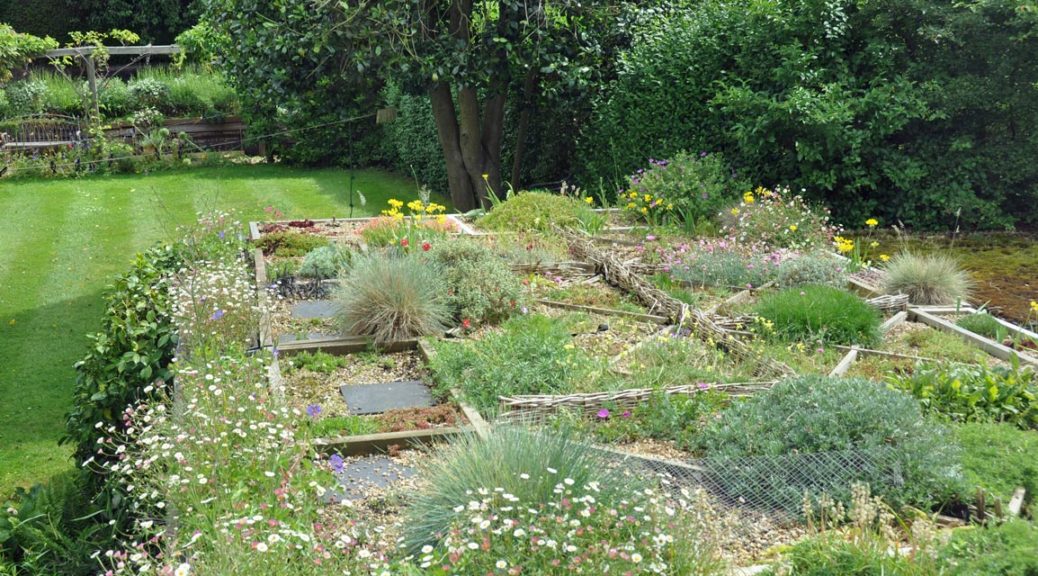
The most hostile environment for plants in my garden is the gravel on top of my flat garage roof. At least technically.  But since it’s been planted up with tough alpines, then there never really seemed to be a problem until this year.

The Summer was incredibly hot and dry so plants did die whilst we were away in August leaving gaps to be re-filled with new plants. It seemed a mixed blessing since the obvious thugs survived but were knocked back a little bit.

But then the weather got colder and very wet and a crack appeared in the roof of my garage with a drip.

In a bit of a panic, I called a roofer last seen five years ago asking for help. To be honest he was rather elderly when he last came round so I was mainly expecting  him to refer me to someone else but when he suggested that he come around and take a look, I wasn’t going to say no. 

John is in his 70s and has obviously worked hard all his life, mainly on the roofs of London. He is a big burly bloke, rather unsteady on his feet and the sight of him up a ladder is the most terrifying thing I’ve seen in a long time. He looks like he’s going to fall off the ladder at every single step up or down. And when he’s firmly on the ground, he looks like he’s about to die of a heart attack at any moment.

So he came around and made a temporary repair to the bitumen on the built in drain on the roof in the hope that it was the source of the problem.  Aside from worrying about him as he climber the ladder, the sight of him with a blow torch waving backwards and forwards near his legs was just too much to watch. We all hid on the opposite side of the house to avoid watching in fascination, sending one of th family over at regular intervals to make sure he was still alive and unhurt. 

A few days later and with a continuing leak, it became apparent that the entire roof would need to be re-sealed, a job that would require us to strip the plants from the roof, reseal the top and then replant.

So now I find myself, plants stripped, roof resealed and about to re-stock the roof. Most of the larger plants can just be sat back on top, but it’s also given me a chance to rearrange things to a more relaxed, less structured lay-out. It has taken just two days, and aside from the annoyance of people suggesting it might be due to the planting has been remarkably trouble free.

The hot weather followed by the cold and wet has most probably created a small amount of subsidence and the garage has flexed as a result, creating a crack that water has found and followed through. Two days into the process, and I’m wondering how best to lay out the plants and in some cases, their surprisingly huge root systems.

So the blue grasses are now in one large central island, with the thugs of the garden located at the corners of the central bed ready to march onwards into the middle as they inevitably will. The less thug like survivors have been placed in the beds around the sides of the roof, those still marked out by wooden boxes. Hopefully the wooden boxes will provide some protection from the root systems of the thugs and by marking out their territory, might encourage me to some weeding.

Most of the gravel removed will just go straight back onto the roof into roughly the same area as it was taken from. It is full of the bulbs planted over the years and of plants now dormant for Winter. It is also rather full of weeds after a year where the roof has been largely abandoned to its own devices.

So we will have to wait through the year to see what plants (whether deliberately planted or weeds) turn up and grow. The weeds can always be dug up or sprayed out of existence. Hopefully by putting the gravel back into roughly the same spot, we won’t end up with a very uneven spread of spring bulbs but, again, they can always be moved about 

I’m hopeful.

Nine Lessons & No carols: BREXIT lesson 1

First Lesson:  “Brexit means Brexit”

This means primarily that leaving the EU is genuinely a major regime change, with massive political, legal, economic and social consequences.

Being just outside the EU outer perimeter fence is not AT ALL similar to living just inside it. Which is where David Cameron sought to entrench the U.K. – outside political, monetary, banking, fiscal Union, outside Schengen, and with a pick and choose approach to what used to be the third pillar of justice and home affairs. His was the last attempt to amplify and entrench British exceptionalism WITHIN the EU legal order.

It failed. A majority voted to leave altogether

Once you leave the EU, you cannot, from just outside the fence, achieve all the benefits you got just inside it.

First, there will, under NO circumstances, be frictionless trade when outside the Single Market and Customs Union. Frictionless trade comes with free movement. And with the European Court of Justice. 

Second, voluntary alignment from outside – even where that makes sense or is just inevitable – does NOT deliver all the benefits of membership. Because, unlike members you are not subject to the adjudication and enforcement machinery to which all members are.

And that’s what we wanted, right? British laws and British Courts.

Fine. But then market access into what is now their market, governed by supranational laws and Courts of which you are no longer part – and not, as it used to be, yours – is worse and more limited than before. That is unavoidable. It is not, vindictive, voluntary, a punishment beating, or any of the other nonsense we hear daily. It is just ineluctable reality.

Leaving the EU whilst continuing to trade with it, as our largest single trade partner means that we have effectively sacrificed real power and influence over how the EU sets the rules and regulations for the majority of our foreign trade, and in return we receive only nominal power over our own state.

The solidarity of the club members will ALWAYS be with each other, not with you. We have seen that over the backstop issue over the last 18 months which will pale into insignificance when it comes to the actual trade negotiations. wait till the trade negotiations.

The solidarity of the remaining Member States will be with the major fishing Member States, not with the U.K. The solidarity will be with Spain, not the U.K., when Madrid makes Gibraltar-related demands in the trade negotiation endgame. The solidarity will be with Cyprus when it says it wants to avoid precedents which might be applied to Turkey.

The EU is negotiating with us, not as a member, but as a prospective soon-to-be third country, a competitor on the global stage. We voted to become a third country and an opponent and rival, not just a partner, now. It is time to accept the consequences.

Farce

Parliament has descended into farce. The government has come up with a version of brexit that no one likes, neither those that voted to leave nor (obviously) those that voted to stay within the EU. Rather than put their proposal to a vote and lose, the government after four days of debate, decided to pull the vote, offending everyone and try to re-open discussions with the EU. We’re supposed to be leaving in March.

Not surprisingly, her own party called for a vote of no confidence in the Prime Minister, Theresa May, which she then won by around 2:1. Not exactly a ringing endorsement, but considerably more than the margin in the referendum.

So here we are. The PM is set to attend an EU meeting today that may generate some kind of non-legally binding letter that states the intent of the EU is not to hold the UK forever hostage in a customs union (the great fear of the most strident leave campaigning MPs). Even if she manages to achieve this, it is unlikely to placate her own MPs who are so far to the extreme and lack such trust in the process that nothing will satisfy them. 

Perhaps more importantly it will also likely fail to please the DUP, a small political party currently propping up her minority government, who quite rightly point out that legally it is entirely clear that the customs union will last forever (whatever intentions might be) for N Ireland unless the EU agrees otherwise, thus creating a border between N Ireland and the rest of the UK, taking one step too far towards a re-united Ireland.

So there will be some face saving letter written that will fail to please most of the MPs currently objecting to the government proposal which is now scheduled to be put before parliament after the Christmas break at the end of January. 

I’m assuming that the PM is hoping that given a choice between a bad deal (her proposal) and no deal at all, most MPs will vote for her deal which is somewhat ironic given the much quoted “No deal is better than a bad deal” parroted for the first year of brexit by her government.

But with that legislation is an amendment put forward by one of the MPs that removes the automatic process whereby we would leave the EU with no deal whatsoever. This would then leave responsibility for directing the brexit negotiations back to parliament where there seems to be no consensus as yet, as to the best way forward. Unless…

The loyal opposition party, Labour are biding their time and hoping MPs will become so disgusted with the way things are going that they can call a vote of no confidence in the entire government and thus force a general election where they themselves might win.

This strategy has a couple of obvious flaws. Whatever their faults and internal arguments or ambitions, the members of the Conservative party will never vote down their own government. The DUP have stated that they will also not vote to overthrow the Tories so there just aren’t enough votes available now we have a fixed term parliament to force a general election.

It’s also worth noting that the country is sick of brexit and want the whole thing over with, or at least progressing. They don’t yet realise that we’re just at the start of the process, that the trade deal as such is going to take many more years to negotiate. Any attempt to derail the process or unseat the government at the moment may well be very unpopular with the electorate and lead to a defeat in a general election.

Most likely the proposal from the government will remain deeply unpopular and be voted down. The Grieve amendment taking “no deal” off the table will be popular and will pass.

Labour may call for a vote of no confidence in the government, but it will fail.

So what happens next? The quick answer is that no one knows.

The government could throw its hands in the air, decide that the whole process was unworkable and undesirable and unilaterally revoke the whole Art50 process. A recent ECJ ruling has confirmed that the UK could do this and remain within the EU on the terms it currently enjoys.  but this seems a very unlikely outcome. As things stands it would run counter to the referendum result, undermining faith in government and parliament.

It is possible for the UK to apply to the EU for an extension to Art50, the process we are currently within that requires us to leave  at the end of March 2019 but it would need the approval of each of the other 27 EU states. Permission would only be given if there was a clear reason such as the need to call a general election or to call for another referendum if the decision on next steps was given to the electorate.

And as we creep closer and closer to the March deadline, unless there emerges a clear consensus within parliament as to the best way forward, a second referendum seems more likely, tinged with the spectre of leaving with no deal at all and the chaos that would cause.

We are edging ever closer to the edge of the waterfall.